Chicago stands as a beacon of architectural innovation boasting one of the most impressive skylines in the world.
Known as the Windy City it has earned a reputation for its pioneering skyscrapers that have shaped urban design globally.
From historic landmarks to modern giants Chicago’s skyline tells a story of bold engineering and visionary creativity.
This city has been home to some of the tallest and most iconic skyscrapers in the United States including the legendary Willis Tower which held the title of the world’s tallest building for 25 years.
Whether admired for their height design or historical significance these skyscrapers continue to captivate residents and visitors alike.
1. Willis Tower
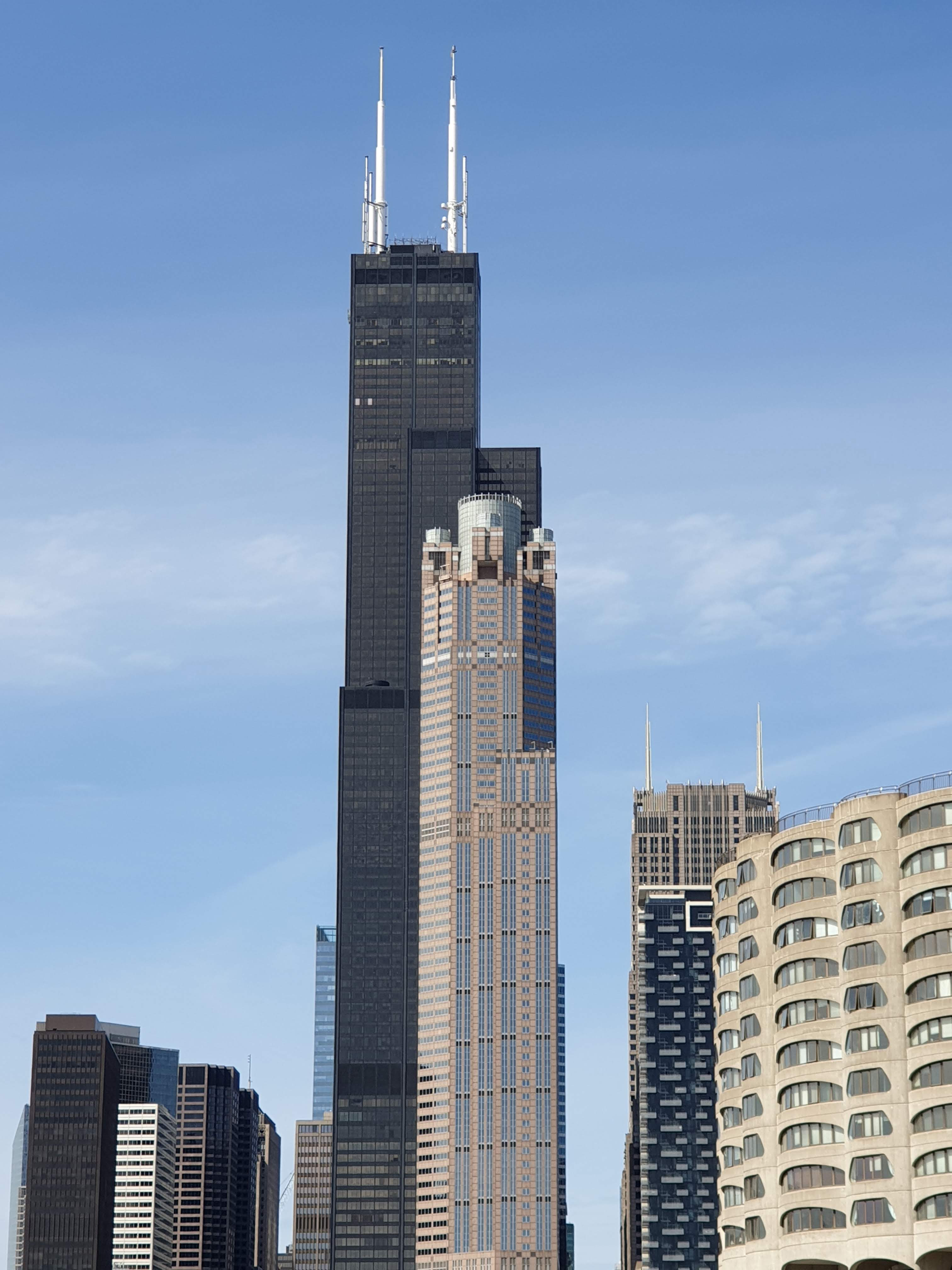
Willis Tower, formerly Sears Tower, stands as Chicago’s tallest skyscraper at 1,450 feet with 110 stories.
Designed by structural engineer Fazlur Rahman Khan, its innovative “bundled tube” structure uses nine square tubes arranged in a 3×3 pattern, enhancing wind resistance and maximizing space.
Completed in 1973, it held the world’s tallest building title for 25 years. The Skydeck on the 103rd floor offers a 360-degree glass viewing platform accessed by North America’s fastest elevator, providing unmatched views of Chicago’s iconic skyline.
2. John Hancock Center
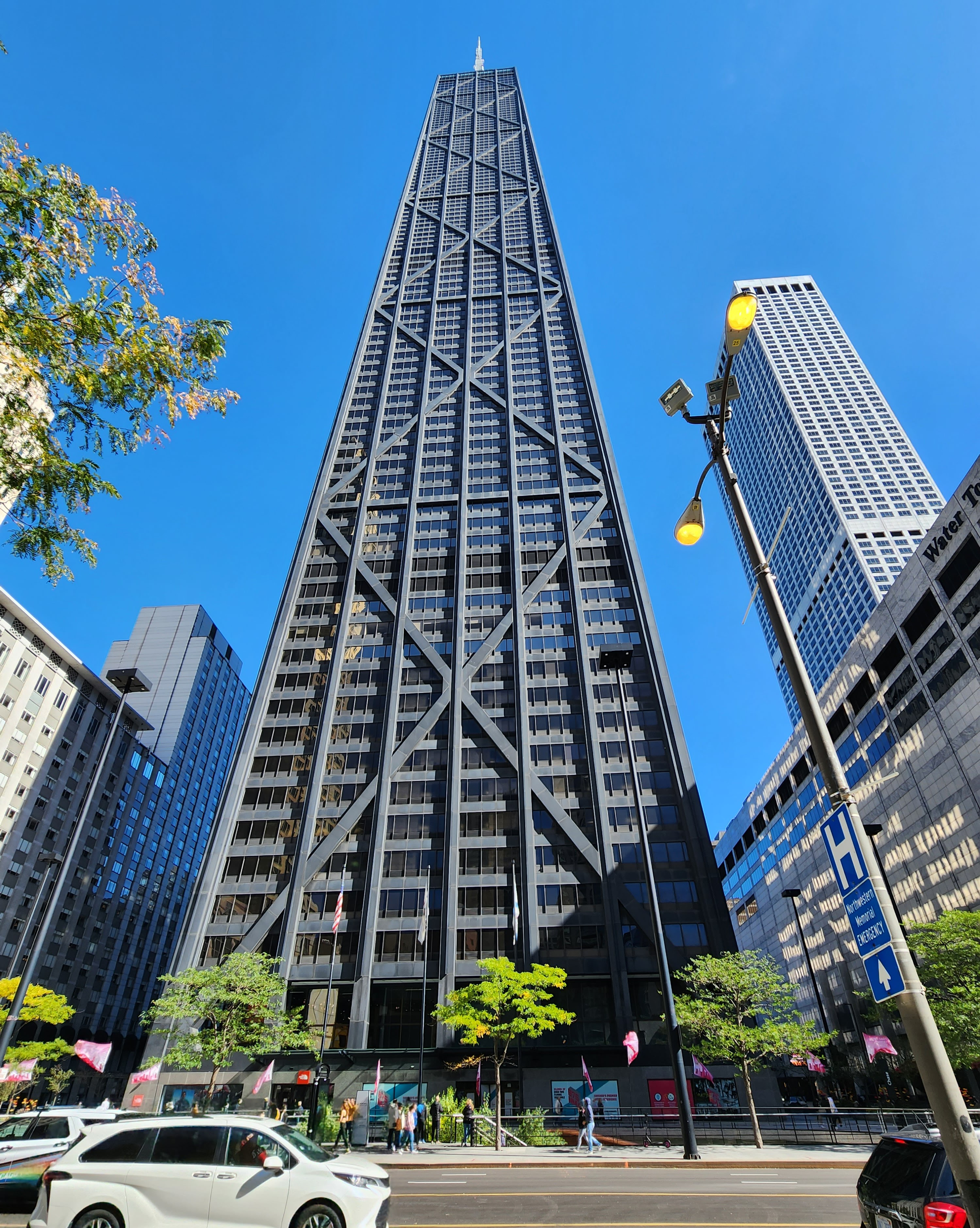
Standing 1,128 feet tall with 100 stories, the John Hancock Center ranks among the world’s tallest skyscrapers. Renamed 875 North Michigan Avenue, this mixed-use tower houses luxury apartments, offices, and retail spaces.
It features the city’s highest restaurant, bar, and café atop its public observatory. Visitors reach the 360-degree, all-glass viewing platform via North America’s fastest elevator, ascending in just 40 seconds.
Its distinctive X-braced exterior enhances structural stability while contributing to its iconic silhouette on Chicago’s skyline.
3. Tribune Tower

The Tribune Tower stands as an iconic neo-Gothic skyscraper on Michigan Avenue near the Chicago River.
Designed by John Mead Howells and Raymond Hood, it was completed in 1925 after winning a design competition. The tower once housed the Chicago Tribune newspaper and WGN Radio.
Its façade incorporates over 150 historic fragments, including stones from the Great Wall of China and Westminster Abbey, symbolizing Chicago’s architectural heritage. Visitors can tour its interior during Open House Chicago, adding to its cultural significance.
4. Aqua Tower

Inspired by water’s movement, the 80-story Aqua Tower redefines Chicago’s skyline with its fluid, undulating balconies.
Designed by Jeanne Gang, the first acclaimed female architect from Chicago, the tower blends luxury living with nature through unique terraces on every floor.
Completed in 2009, this lakeshore landmark houses the Radisson Blu Aqua Hotel and offers sweeping views of Lake Michigan.
Its shimmering facade stands out, making Aqua Tower a modern architectural icon celebrated for innovation and elegance.
5. Merchandise Mart
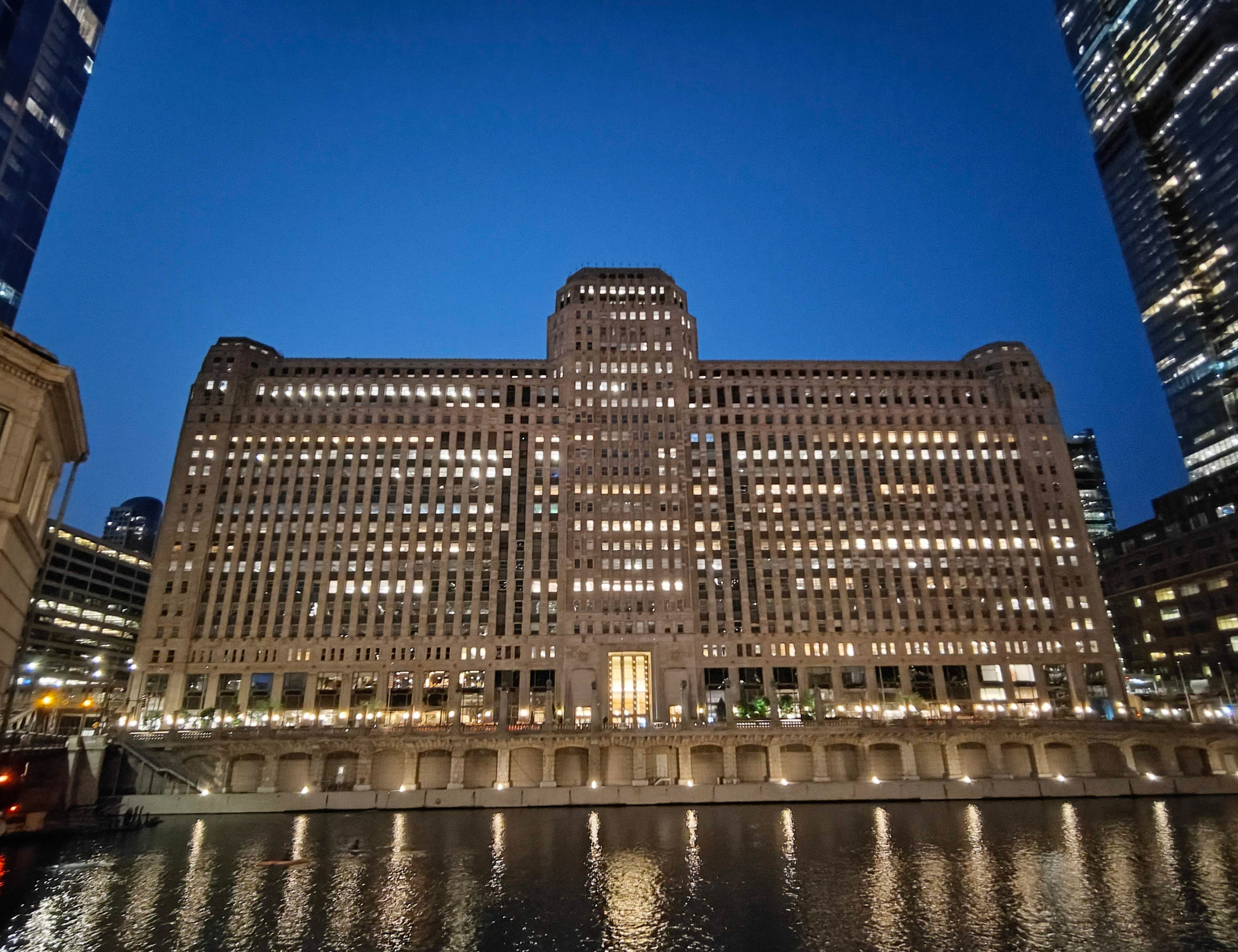
The Merchandise Mart stands as one of Chicago’s most iconic Art Deco skyscrapers, completed in 1930. Designed by Alfred P. Shaw and the firm Graham, Anderson, Probst and White, it occupies a prime spot near the Chicago River’s confluence.
This massive building, once the world’s largest commercial space, features a distinctive façade and innovative design that helped shape Chicago’s architectural legacy.
Its historical significance and central location make it a must-see landmark among Chicago’s famous skyscrapers.
6. Aon Center

The Aon Center stands 1,136 feet tall with 83 floors, making it Chicago’s fourth tallest building. Completed in 1973, it features a sleek minimalist design clad in white granite, replacing its original Italian Carrara marble facade, which cracked due to harsh winters.
Known initially as Big Stan after its original owner, Standard Oil, the tower now serves as the headquarters for Aon Corporation. Its clean lines and tall silhouette firmly embed it among Chicago’s iconic skyscrapers.
7. Civic Opera House
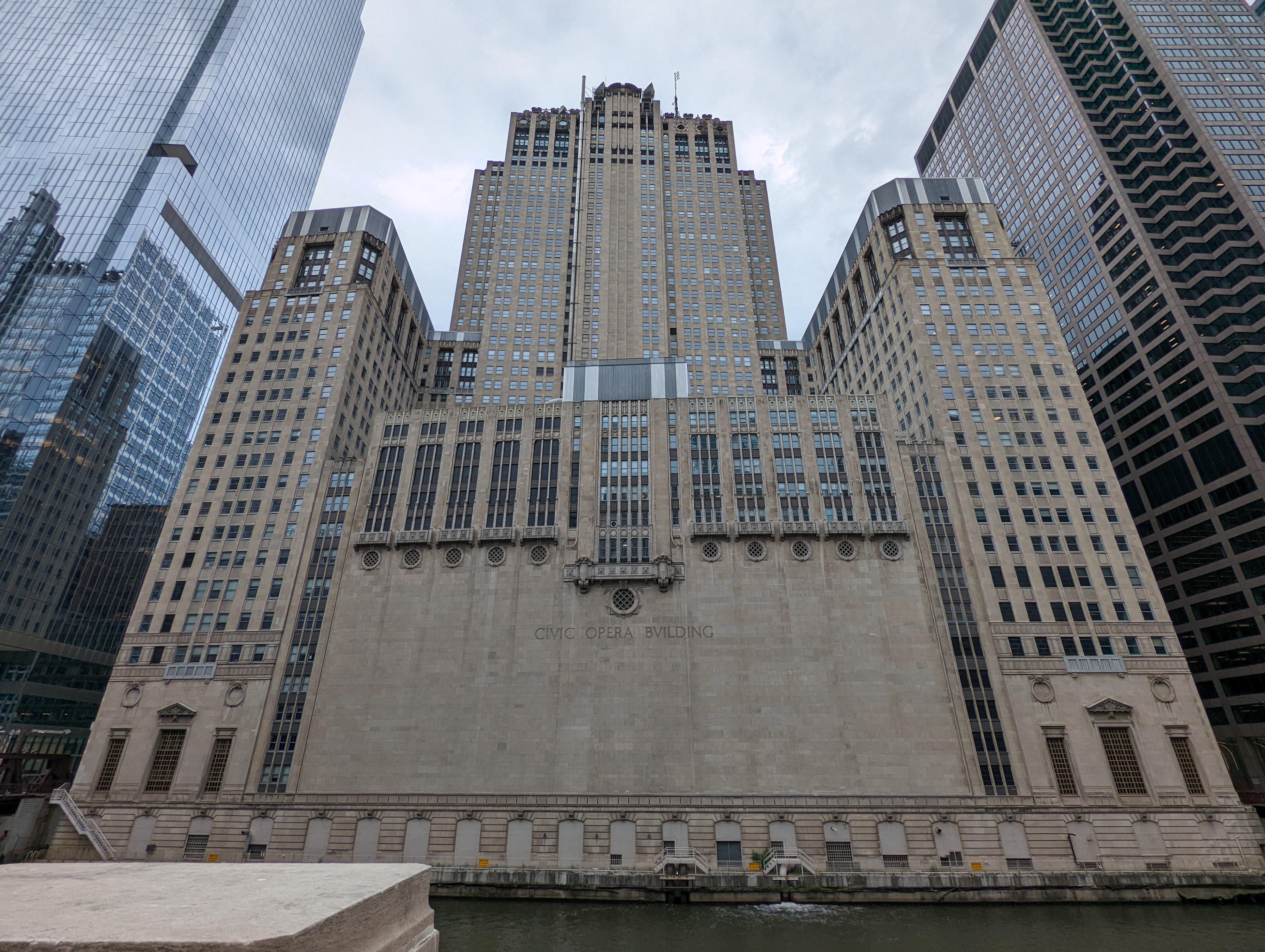
The Civic Opera House, built in 1929, stands as one of Chicago’s most iconic cultural skyscrapers.
Designed by Graham, Anderson, Probst & White, it was commissioned by industrialist Samuel Insull and quickly became a premier opera venue.
Nicknamed “Insull’s Throne” for its massive chair-like shape, the building combines elegant historic architecture with Chicago’s rich cultural heritage.
Located near Lake Michigan, it remains a top destination for performing arts enthusiasts and architecture lovers alike.
8. Carbide & Carbon Building

Standing 503 feet tall with 37 stories, the Carbide & Carbon Building is a prime example of Art Deco architecture in Chicago.
Designed by the Burnham Brothers in 1929 as a regional office for Union Carbide, its polished black granite façade contrasts with striking gold leaf accents.
The building’s stylized leaf motifs reference prehistoric carbon deposits, connecting design with natural history.
Renamed the Pendry Chicago Hotel after renovations completed in 2021, this landmark combines historic charm with modern luxury, making it a must-see on Michigan Avenue.
9. Chicago Board of Trade Building

Standing at 605 feet with 44 stories, the Chicago Board of Trade Building is a stunning Art Deco skyscraper completed in 1930.
Designed by Holabird & Root, it once housed the world’s largest commodity exchange. The building’s iconic statue of Ceres, the Roman goddess of agriculture, crowns its pyramid-shaped top.
Its striking limestone façade and symbolic sculptures celebrate Chicago’s trading legacy, making it a must-see landmark in the city’s financial district.
10. Two Prudential Plaza

Two Prudential Plaza stands 995 feet tall with 64 floors, completed in 1990. As part of the One Two Pru complex alongside One Prudential Plaza, it offers premium office space and upscale amenities.
The tower attracts prestigious tenants such as the Consulate General of Canada in Chicago and the Chicago Tribune.
This distinguished structure maintains a strong presence in Chicago’s elite skyscraper lineup without an observation deck. Located at 180 N Stetson Avenue, it perfectly complements the city’s architectural heritage.
Alicia Richards