Barcelona’s skyline is a canvas showcasing the genius of Antoni Gaudí, whose visionary architecture continues to captivate visitors worldwide.
As a leading figure of Catalan Modernism, Gaudí’s work blends Gothic and Art Nouveau styles into unique masterpieces that define the city’s character.
From the iconic spires of the Sagrada Familia to the colorful mosaics of Park Güell, Gaudí’s buildings are more than structures—they’re works of art that tell a story of innovation and creativity.
Many of his creations have earned UNESCO World Heritage status, affirming their cultural and historical significance.
Whether you’re an architecture enthusiast or a curious traveler, these landmarks are essential stops that reveal the extraordinary vision behind one of the world’s most celebrated architects.
1. La Sagrada Familia

La Sagrada Familia stands as Gaudí’s most iconic masterpiece, dominating Barcelona’s skyline. Construction started in 1882 and is still ongoing, with ten spires yet to be completed.
The tallest central spire reaches 170 meters, symbolizing Jesus Christ, carefully designed to be one meter shorter than Montjuïc Hill, reflecting Gaudí’s respect for divine creation.
This basilica blends Gothic and Art Nouveau styles through intricate facades and stunning interiors, attracting millions annually and remaining a must-see landmark in Barcelona.
2. Casa Batlló
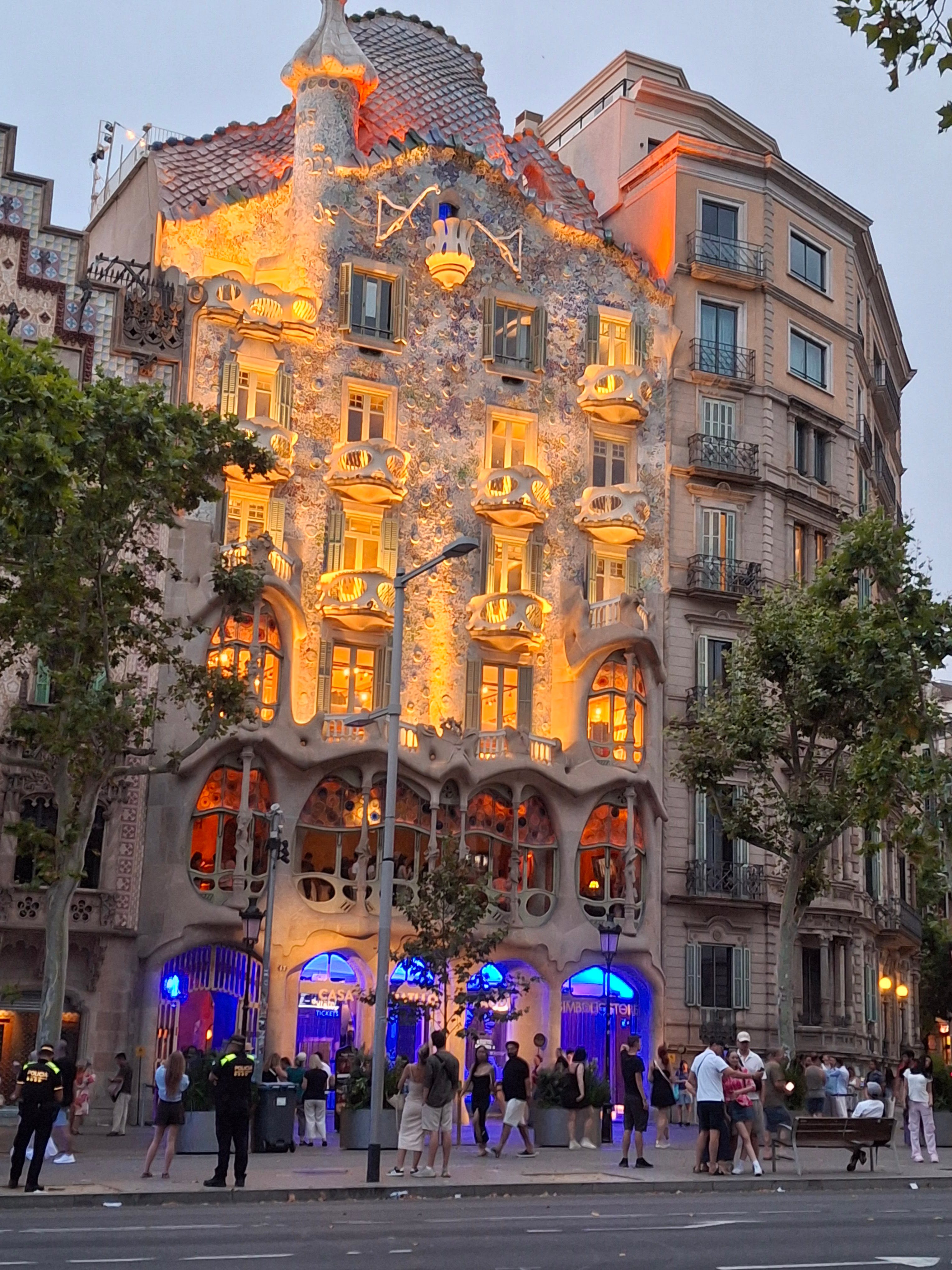
Casa Batlló stands as one of Gaudí’s most creations, located in the heart of Barcelona. Known for its colorful, undulating facade, the building features mosaic tiles, skull-shaped balconies, and bone-like pillars that showcase Gaudí’s signature organic forms.
The interior impresses with flowing lines, stained glass, and innovative natural lighting designs. This masterpiece exemplifies Gaudí’s unique blend of Art Nouveau with natural elements, making Casa Batlló a must-visit for anyone exploring his architectural legacy.
3. Casa Milà
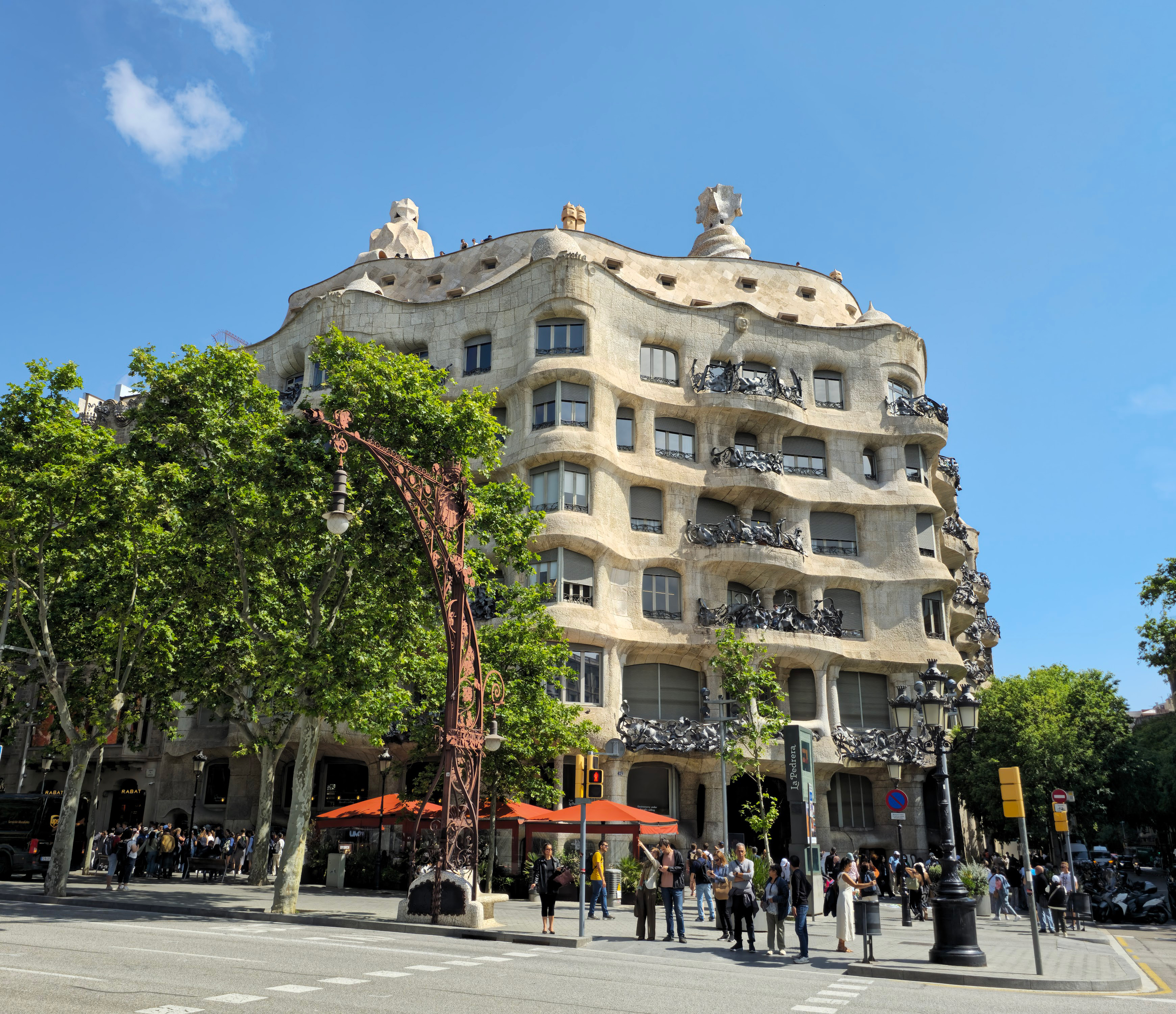
Casa Milà, also known as La Pedrera, stands out as one of Gaudí’s most innovative masterpieces.
Built from 1906 to 1912 on Passeig de Gràcia, its undulating stone facade mimics natural waves, while wrought-iron balconies resemble twisting vines.
The rooftop features surreal chimneys and ventilation towers that look like sculptures. Inside, open-plan designs and abundant natural light showcase Gaudí’s functional artistry.
The attic’s catenary arches house an interactive museum revealing Gaudí’s life and work, making Casa Milà a must-see symbol of his architectural genius.
4. Casa Vicens

Casa Vicens marks Antoni Gaudí’s first major project, completed between 1883 and 1888. This summer home showcases his early exploration of color and texture, blending Moorish, Gothic, and Oriental influences.
Its vivid ceramic tiles, intricate ironwork, and bold geometric patterns set it apart from traditional architecture.
Located in Barcelona’s Gràcia district, Casa Vicens is a UNESCO World Heritage Site and a key milestone in Gaudí’s journey toward his signature organic style. It remains a captivating example of his innovative vision.
5. Palau Güell

Palau Güell stands as a prime example of Gaudí’s early genius, blending innovative design with luxurious detail.
This urban mansion, built between 1886 and 1890 for industrialist Eusebi Güell, showcases Gaudí’s mastery of space with its parabolic arches and intricate ironwork.
The rooftop chimneys, adorned with colorful mosaics, highlight his unique decorative style. Located near La Rambla, Palau Güell offers visitors a rare glimpse into his architectural evolution and inventive use of light and materials.
6. Gaudí House Museum

Located within Park Güell, the Gaudí House Museum offers an intimate glimpse into the architect’s personal life. He lived here between 1906 and 1925 while designing the park.
The museum showcases original furniture and decorative pieces designed by Gaudí, emphasizing his unique style and craftsmanship. Visitors can explore rooms filled with period art, ceramics, and architectural models.
This museum connects Gaudí’s creative process with his living environment, enriching the understanding of his visionary work in Barcelona.
7. Casa Calvet

Casa Calvet, built between 1898 and 1900, showcases Gaudí’s early style blending tradition with innovation.
Commissioned by the Calvet textile family, its symmetrical stone facade features elegant wrought iron balconies and nature-inspired mushroom motifs.
Inside, Gaudí crafted functional spaces with artistic furniture and intricate details reflecting his craftsmanship.
Awarded Barcelona’s best building in 1900, Casa Calvet reveals Gaudí’s skill in balancing practicality with decorative flair, marking an important step in his architectural evolution.
8. Church of Colonia Güell

Located just outside Barcelona, the Church of Colonia Güell showcases Gaudí’s innovative structural techniques.
Although unfinished, the crypt is a UNESCO World Heritage Site and highlights his use of catenary arches and organic forms.
It served as a testing ground for design elements later applied in the Sagrada Familia. Visitors admire the harmonious integration of architecture and nature, reflecting Gaudí’s visionary approach to modernism and craftsmanship.
9. Colegio de las Teresianas

Antoni Gaudí designed Colegio de las Teresianas between 1888 and 1890, blending Gothic Revival style with his unique touch.
The brick facade features his signature arches and intricate ironwork. Inside, natural light floods the central corridors, creating a calm atmosphere.
Though not open to the public, its exterior showcases Gaudí’s ability to combine functionality and symbolism, with religious motifs like crosses and the Christ anagram incorporated into the design. This modest building highlights Gaudí’s early architectural evolution in Barcelona.
10. Casa Botines

Casa Botines stands out as one of Gaudí’s few works outside Barcelona city, located in León, Spain. Completed in 1892, this modernist building blends Gothic revival with Gaudí’s unmistakable style.
Featuring sharp angles, wrought-iron details, and rich stone textures, it served as a residential and commercial space.
The striking pointed towers and stained glass windows highlight Gaudí’s early experimentation with medieval influences. Today, Casa Botines functions as a museum, showcasing the architect’s versatility beyond Catalonia.
Alicia Richards