India’s architectural landscape is a tapestry woven with centuries of history and culture. The country boasts some of the world’s most iconic buildings, each telling a unique story of its past.
From majestic forts and palaces to intricate temples and stupas, these structures showcase India’s rich heritage and artistic brilliance.
Among the most famous buildings are the Taj Mahal, a symbol of eternal love, and the Qutub Minar, a towering example of medieval architecture.
These landmarks attract millions of visitors every year, highlighting their global significance. Exploring India’s top buildings offers a fascinating glimpse into the diverse traditions and historical eras that have shaped the nation’s identity.
1. Taj Mahal
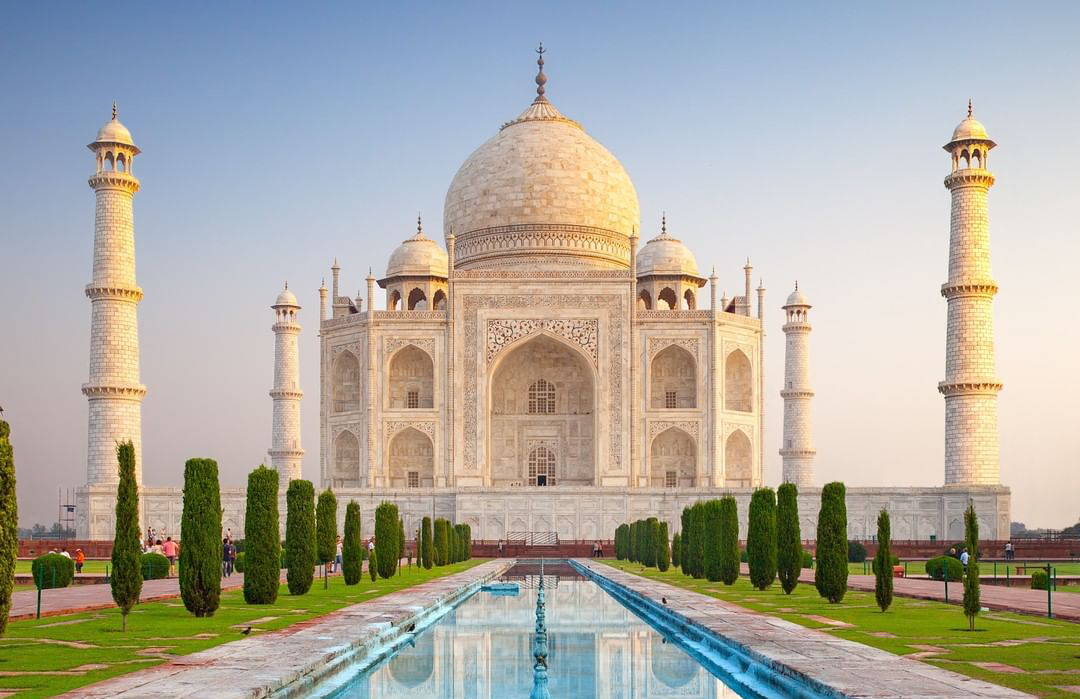
The Taj Mahal, located in Agra, is India’s most iconic monument and a UNESCO World Heritage Site. Built by Mughal emperor Shah Jahan in memory of his wife Mumtaz Mahal, this white marble mausoleum epitomizes Mughal architecture with intricate carvings and precious stone inlays.
Attracting millions each year, it symbolizes eternal love and stands as a testament to India’s rich cultural heritage and artistic brilliance.
The Taj Mahal’s symmetrical design and lush gardens highlight its timeless allure, making it a must-visit landmark.
2. Hawa Mahal

Hawa Mahal, known as the Palace of Winds, defines Jaipur’s skyline with its striking pink sandstone façade. Built in 1799, this five-story palace blends Indo-Mughal and Rajasthani architecture.
Its 950 ornate windows, or jharokhas, create a natural cooling system by channeling desert breezes, keeping interiors comfortable year-round.
Designed for royal women to observe street festivals unseen, Hawa Mahal’s rear elevation is renowned for its intricate design.
Its unique curved structure, mimicking Krishna’s crown, keeps it standing without foundations. Located in Jaipur’s Pink City, it remains a symbol of climate-conscious historic architecture.
3. Konark Sun Temple

The Konark Sun Temple in Odisha, built circa 1250, is a masterpiece of Indian temple architecture.
Dedicated to Surya, the Sun God, this UNESCO World Heritage Site is shaped like a colossal chariot with 24 intricately carved wheels and seven stone horses.
Its Nagara architectural style features detailed sculptures depicting human life, deities, and erotic art.
Despite partial ruins, the temple’s grandeur and craftsmanship remain impressive. Visitors in February can enjoy the Konark Dance Festival, celebrating India’s rich cultural heritage.
4. Mysore Palace

Mysore Palace stands as a crown jewel of Indo-Saracenic architecture in India. It served as the royal seat for the Wodeyars from 1350 to 1950. Rebuilt after a fire in 1897, its design blends British, Hindu, Muslim, and Rajput styles.
The palace features spacious white marble-floored rooms, paintings, and luxurious decor. Its Durbar Hall hosts stunning chandeliers and stained glass, illustrating royal grandeur. Every year, over 6 million visitors explore this landmark.
The palace glows spectacularly at night, especially during the Dasara festival, highlighting its cultural significance and artistic brilliance.
5. Lotus Temple

The Lotus Temple in New Delhi is a modern architectural marvel known for its lotus flower-inspired design.
Designed by architect Fariborz Sahba and completed in 1986, it features 27 marble-clad petals arranged in clusters of three.
This Bahá’í House of Worship invites people of all faiths to meditate and pray in its serene central hall.
The temple’s striking form symbolizes purity, unity, and peace, making it a powerful emblem of contemporary Indian architecture that attracts millions of visitors annually.
6. Golden Temple

The Golden Temple in Amritsar stands as a masterpiece of Sikh architecture and spiritual significance.
Built in the 16th century, it harmoniously blends Hindu and Islamic design elements. Unlike traditional elevated structures, it sits at ground level, symbolizing equality.
Its gold-plated façade and serene Amrit Sarovar pool create a stunning visual experience. Founded by Guru Arjan Dev, the temple represents Sikhism’s core values of humility and devotion.
Millions visit annually to witness its shimmering beauty and partake in its inclusive community kitchen, reinforcing its status as a symbol of faith and unity in India.
7. Charminar

Charminar, built in 1591 by Sultan Muhammad Quli Qutb Shah, stands at the heart of Hyderabad as a symbol of the city’s rich history.
This iconic monument features four grand arches facing different directions, offering panoramic views of the surrounding bazaars. Known for its unique Indo-Islamic architecture, Charminar attracts millions of visitors annually.
Nearby, the historic Mecca Masjid complements its cultural significance. With entry fees of INR 25 for Indians and INR 300 for foreigners, Charminar remains a must-visit landmark showcasing Hyderabad’s heritage.
8. Victoria Memorial

Victoria Memorial in Kolkata stands as a grand tribute to Queen Victoria, blending Indo-Saracenic, Mughal, Venetian, Egyptian, Islamic, and Decani architectural styles.
Designed by William Emerson, this majestic white marble building is surrounded by lush gardens and serves as a museum showcasing British India artifacts, paintings, and coins.
The memorial reflects the fusion of colonial and Indian design elements, making it a key historical landmark and a popular tourist destination that highlights India’s colonial legacy and architectural brilliance.
9. Brihadisvara Temple
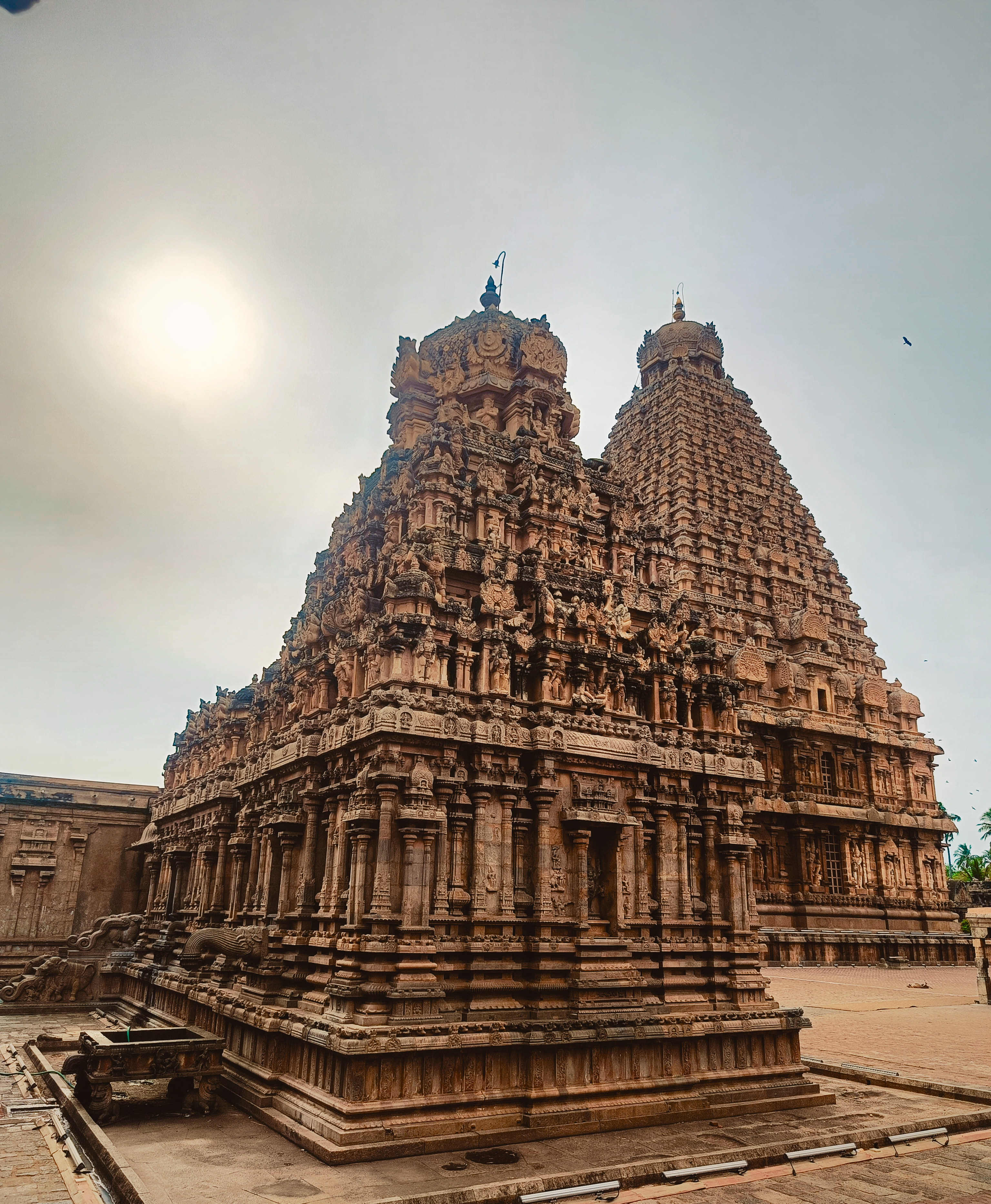
Brihadisvara Temple, located in Thanjavur, Tamil Nadu, is a 11th-century Chola dynasty masterpiece.
Famous for its towering 216-foot vimana, the temple exemplifies Dravidian architecture with granite construction and intricate frescoes.
It serves as a UNESCO World Heritage Site and showcases advanced engineering of its time, including a massive monolithic Nandi statue.
The temple honors Lord Shiva and remains a pilgrimage site, attracting thousands annually who admire its monumental scale and detailed artistry.
10. Gateway Of India

The Gateway of India stands as a monumental archway in Mumbai, built in 1924 to commemorate King George V’s visit. It blends Indo-Saracenic, Mughal, and Gothic architectural styles.
Crafted from yellow basalt and reinforced concrete, the structure towers 26 meters high and overlooks the Arabian Sea. Gateway of India attracted millions as the ceremonial entrance for British viceroys and remains a key tourist spot today.
Its location near the bustling Apollo Bunder waterfront connects India’s colonial past with modern Mumbai’s culture.
Alicia Richards