Baroque architecture captivates with its dramatic flair and intricate details that transformed Europe’s skyline in the 17th and 18th centuries.
This style combines bold shapes with lavish decorations to create buildings that feel alive and grand. From churches to palaces, Baroque architecture reflects power, movement, and emotion like no other.
Exploring the 10 most famous Baroque buildings reveals the genius of architects who pushed boundaries and inspired generations.
These masterpieces continue to draw millions of visitors eager to experience their awe-inspiring beauty. Understanding these iconic structures offers a glimpse into history, art, and culture wrapped in stunning design.
1. San Carlo alle Quattro Fontane
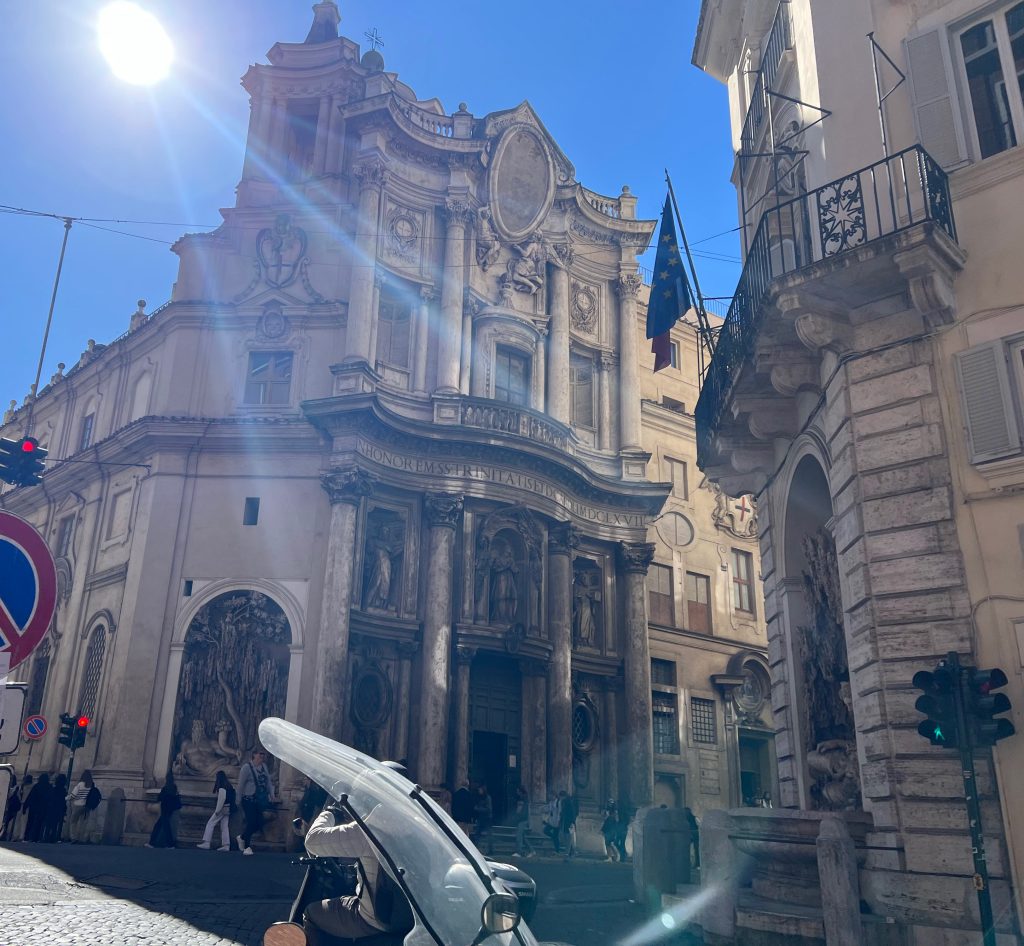
San Carlo alle Quattro Fontane, designed by architect Francesco Borromini, epitomizes Baroque innovation.
Completed in 1646, this Roman church features an oval dome with intricate geometric patterns that create a dynamic sense of movement.
Borromini’s masterful use of curved lines and unexpected shapes breaks classical symmetry, highlighting emotional intensity.
Small yet grand, the church’s façade combines flowing forms and sculptural elements, making it a pioneering example of Baroque architecture’s bold expression and complex spatial design.
2. Karlskirche
Karlskirche in Vienna stands as a crowning example of Baroque architecture, combining grandeur with symbolic elements.
Designed by Johann Bernhard Fischer von Erlach, its massive dome and twin columns create a dramatic skyline presence.
The church blends classical Greek and Roman motifs with Baroque dynamism, notably in its ornate façade and richly decorated interior.
Visitors admire frescoes by Johann Michael Rottmayr and a stunning altar. Karlskirche embodies the Baroque spirit with bold shapes, lavish decoration, and architectural innovation, making it a must-see landmark reflecting 18th-century artistic ambition.
3. Palace of Versailles
Showcasing Baroque grandeur, the Palace of Versailles in France stands as a symbol of royal opulence. Built under Louis XIV’s reign, it features expansive gardens, intricate sculptures, and the iconic Hall of Mirrors with 357 mirrors reflecting natural light.
Designed by architects Louis Le Vau and Jules Hardouin-Mansart, the palace combines bold symmetry and lavish decoration. Its ornate interiors, grand staircases, and vast courtyards emphasize drama and power.
Versailles significantly influenced European palace design, embodying Baroque’s theatricality and the monarchy’s cultural dominance.
4. Il Gesu
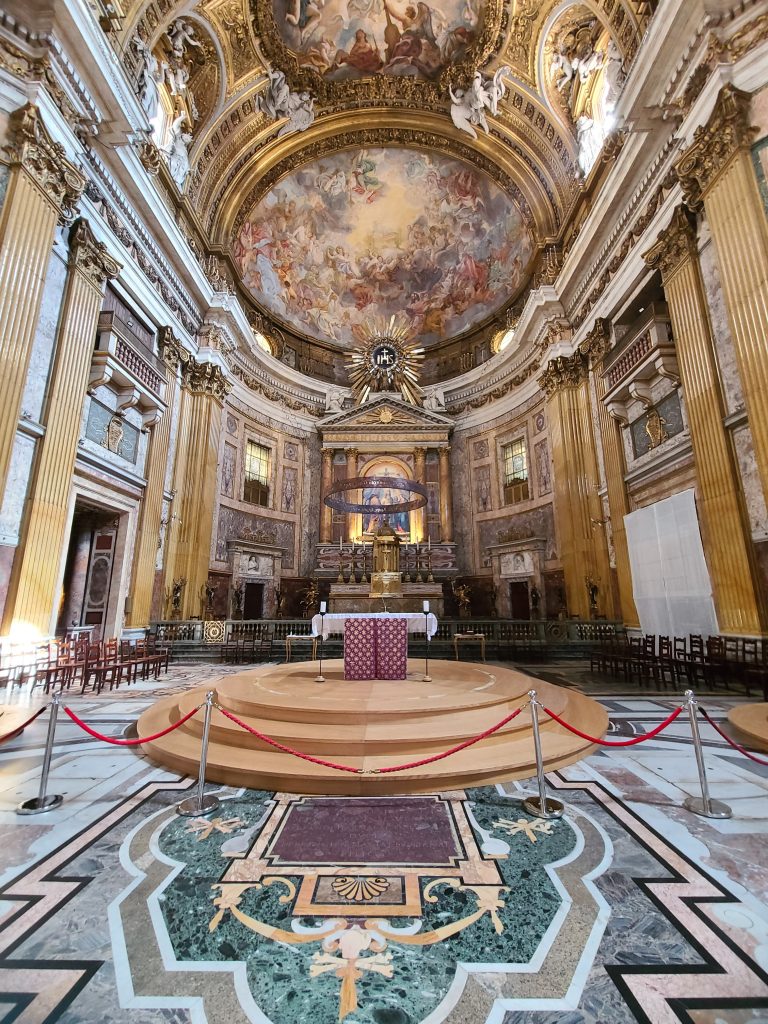
Il Gesu in Rome, completed in 1584, marks a turning point in Baroque church design. Its façade, designed by Giacomo della Porta, features a balanced but dramatic two-tier system with volutes connecting the levels, creating a powerful vertical emphasis.
The interior’s vast nave and ornate ceiling frescoes by Giovanni Battista Gaulli draw the eye upward, enhancing spiritual awe.
Il Gesu’s innovative use of light, open space, and decoration set a new standard for Jesuit churches across Europe, emphasizing clarity and theatricality essential to Baroque architecture.
5. St. Paul’s Cathedral
St. Paul’s Cathedral in London, designed by Sir Christopher Wren, stands as a monumental Baroque masterpiece. Completed in 1710, its iconic dome, one of the largest in the world, dominates the city skyline.
The cathedral combines classical elements like Corinthian columns with dramatic Baroque curves and intricate detailing.
Inside, the grand nave and ornate mosaics exemplify lavish decoration and spatial grandeur. Its design balances structural innovation with emotional impact, marking a pivotal moment in English Baroque architecture and influencing countless churches globally.
6. Les Invalides
Les Invalides in Paris stands as a prime example of French Baroque architecture. Designed by Jules Hardouin-Mansart and completed in 1708, it combines a grand military hospital with a monumental royal chapel.
The dome, gilded and soaring over 100 meters high, features intricate Baroque ornamentation and symbolizes royal power.
Its harmonious façade balances classical symmetry with lavish details, while the interior’s spacious nave and ornate altar showcase dramatic light effects.
Les Invalides also houses Napoleon Bonaparte’s tomb, linking architecture with France’s historical legacy.
7. Zwinger (Dresden)
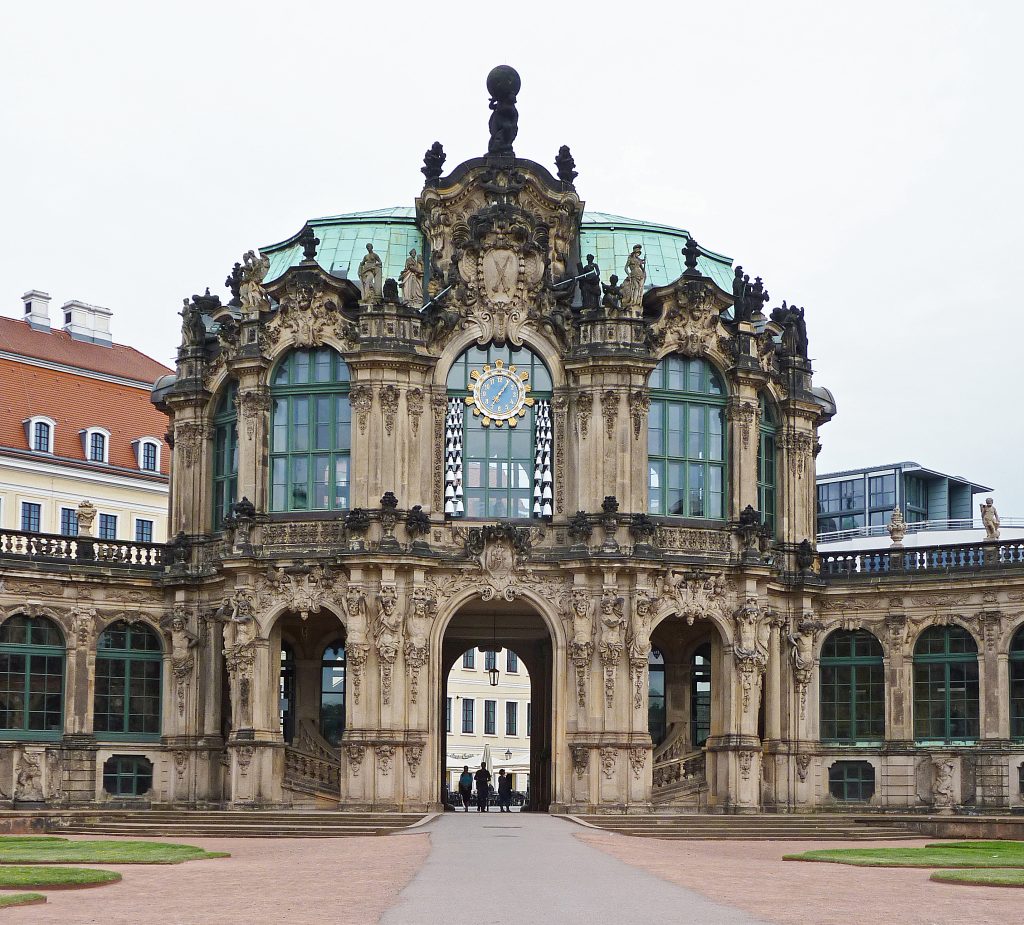
Built between 1710 and 1728, the Zwinger in Dresden is a stunning example of German Baroque architecture.
Designed by architect Matthäus Daniel Pöppelmann, it features an elegant courtyard framed by pavilions, galleries, and intricate sculptures.
The Zwinger blends theatrical design with classical forms, showcasing lavish ornamentation like mythological statues and balustrades.
Originally a leisure palace for the Saxon court, today it houses museums including the Old Masters Picture Gallery.
Its harmonious layout and ornate decorations reflect Baroque grandeur and artistic precision, making it a landmark of Dresden’s cultural heritage.
8. Cathedral of Santiago de Compostela
Showcasing Baroque grandeur, the Cathedral of Santiago de Compostela in Spain features a richly decorated façade designed by Fernando de Casas y Novoa in the early 18th century.
It combines dramatic curves, intricate sculptures, and bold columns that create a dynamic visual experience. Inside, the cathedral’s lavish altarpieces and ornamental chapels reflect Baroque’s emotional intensity, drawing pilgrims and visitors alike.
As a key pilgrimage site on the Camino de Santiago, the cathedral’s architecture embodies both spiritual significance and artistic mastery, making it a standout example of Baroque religious design.
9. St. Peter’s Basilica
Dominating Vatican City, St. Peter’s Basilica stands as a pinnacle of Baroque architecture. Designed by architects like Gian Lorenzo Bernini and Carlo Maderno, it combines colossal scale with intricate detail.
Its vast dome, inspired by Michelangelo, soars 136 meters high, symbolizing divine grandeur. Bernini’s expansive piazza features sweeping colonnades that embrace visitors, creating a theatrical entrance.
Inside, lavish mosaics, sculpted marble, and the ornate bronze Baldachin highlight the Basilica’s spiritual and artistic power.
This masterpiece blends architecture, sculpture, and symbolism, defining Baroque’s dramatic emotional impact on sacred spaces.
10. Schönbrunn Palace
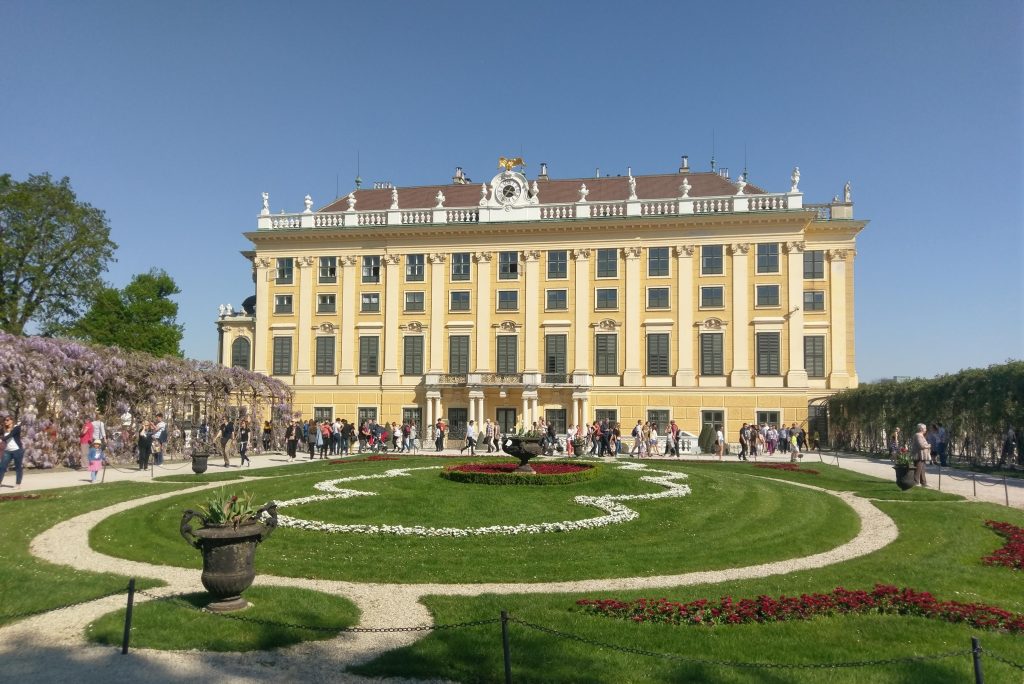
Situated in Vienna, Schönbrunn Palace stands as a monumental example of Baroque architecture.
Designed by Johann Bernhard Fischer von Erlach and completed in the early 18th century, the palace showcases grand symmetry combined with elaborate decorations.
Its 1,441 rooms include lavish interiors featuring frescoes, stuccoes, and ornate furnishings that highlight imperial splendor.
The surrounding formal gardens, with their geometrical layouts, fountains, and sculptures, extend the Baroque style into landscape design.
As a former summer residence of the Habsburgs, Schönbrunn remains a symbol of power and artistic achievement in European Baroque architecture.
Alicia Richards