Seattle’s skyline is a captivating blend of historic charm and modern innovation. Known for its iconic structures, the city showcases architectural styles ranging from Art Deco to Northwest modern, making its buildings stand out across the Pacific Northwest. Each landmark tells a unique story about Seattle’s culture, history, and growth.
Among these, the Space Needle remains the most recognizable symbol, offering breathtaking views and a glimpse into the city’s futuristic vision since 1962.
Beyond this towering icon, Seattle is home to a diverse array of famous buildings that attract millions of visitors every year. Exploring these architectural gems reveals why Seattle’s cityscape continues to inspire and impress.
1. Space Needle
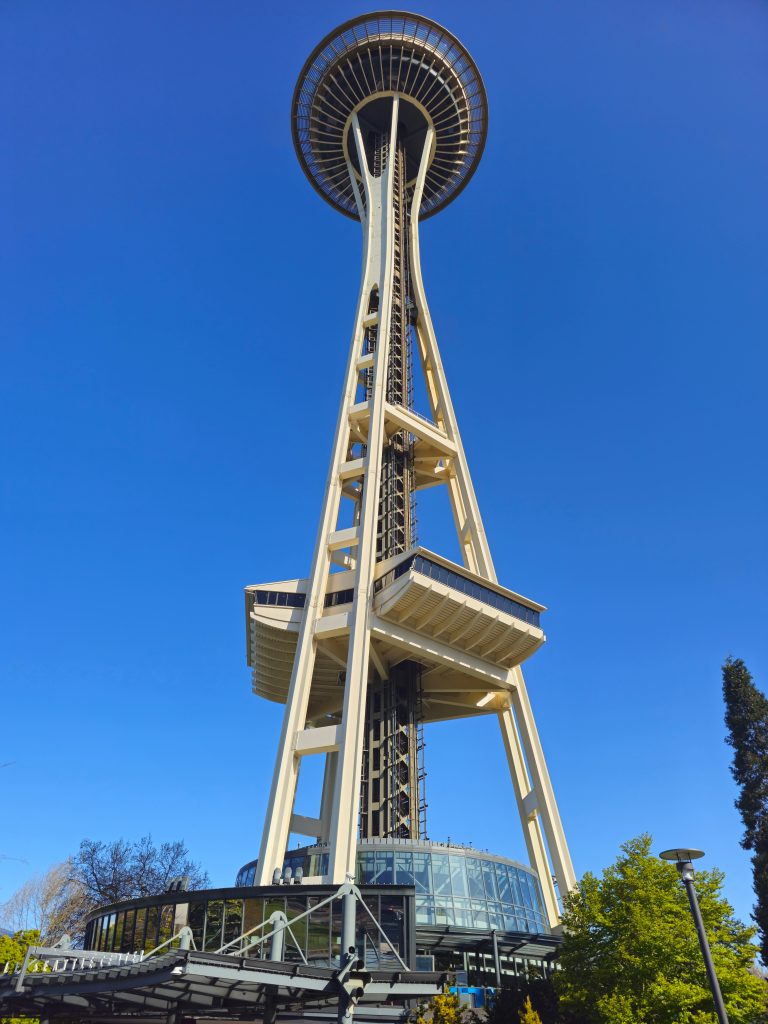
The Space Needle stands as Seattle’s most iconic landmark, built in 1962 for the World’s Fair showcasing technological progress.
Reaching 605 feet, its futuristic flying saucer design by John Graham uses metal and glass, rare for its era.
Visitors enjoy a 360-degree view from the observation deck, enhanced by a rotating glass floor added in 2018. Renovations in 2000 improved elevators and guest amenities.
Though not Seattle’s tallest, its location offers sweeping vistas of downtown and surrounding landmarks, symbolizing the city’s innovation and spirit.
2. Museum of Pop Culture
The Museum of Pop Culture (MoPOP) celebrates Seattle’s rich cultural legacy through a stunning architectural design by Frank Gehry.
Its 140,000-square-foot structure features 3,000 metal panels shaped to evoke the fluidity of music and art.
MoPOP houses extensive exhibits on Seattle’s musical heritage, including Jimi Hendrix memorabilia.
Visitors can explore permanent collections and rotating exhibits focused on pop culture icons, music, film, and science fiction.
Located at 325 5th Ave N, the museum operates daily from 10 AM to 5 PM, offering an immersive experience into Seattle’s creative spirit.
3. Seattle Central Library
Seattle Central Library stands out with its 11 stories and 185-foot height, featuring a glass and steel exterior designed by Rem Koolhaas and LMN Architects.
Opened in 2004, it houses nearly 1.5 million books and includes public spaces like airy reading rooms and a revolving book spiral for efficient browsing.
The library supports 400 public computers and 143 underground parking spots. Its unique “floating box” design combines complex geometry with functionality, making it a vital, hub in downtown Seattle, used by nearly two million people in its first year alone.
4. Smith Tower
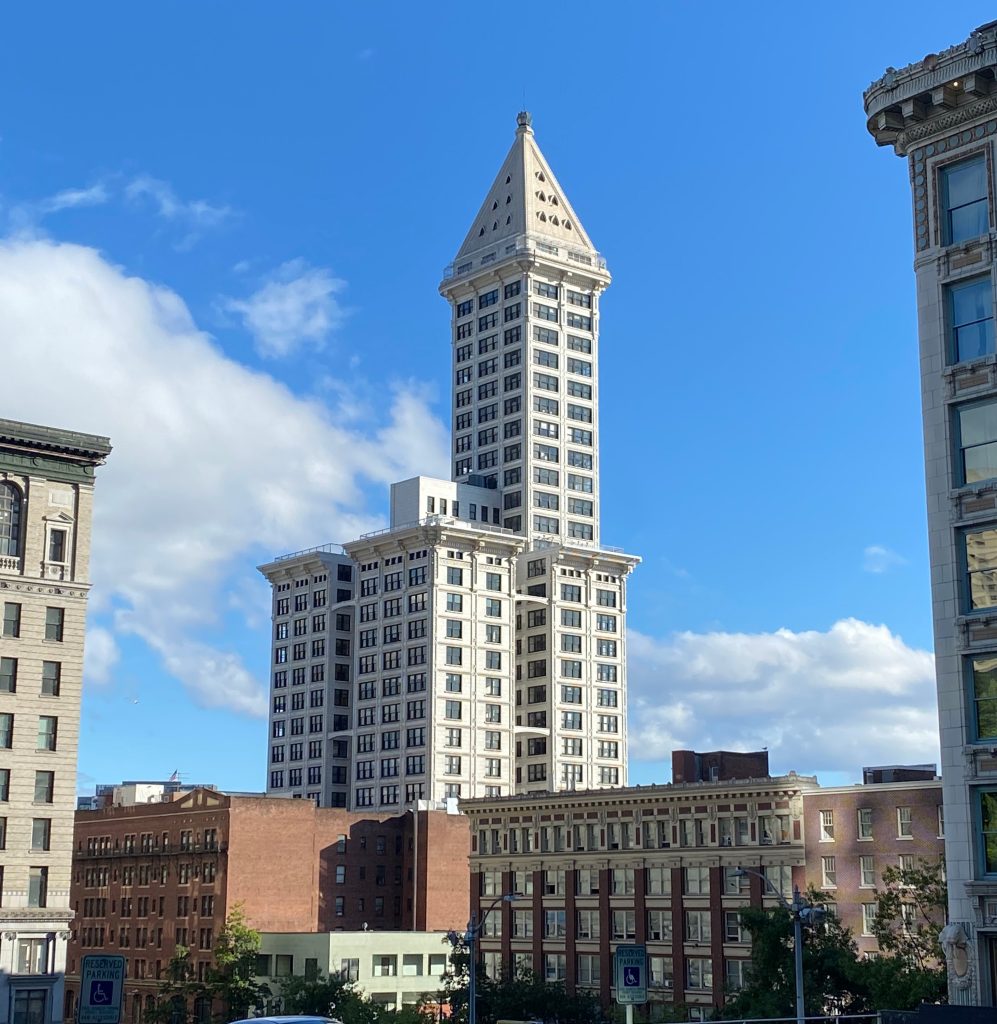
Smith Tower, completed in 1914, stands as Seattle’s first skyscraper and a symbol of early 20th-century architecture. At 462 feet tall with 38 floors, it was the tallest building west of the Mississippi for over 50 years.
Its neoclassical design features a distinctive three-story pyramid top, making it easily recognizable.
Smith Tower now functions as a event space, with a speakeasy-style bar on the 35th floor observatory offering 360-degree panoramic views of downtown Seattle.
Located at 506 Second Avenue, it remains a must-visit landmark reflecting the city’s historic skyline.
5. Rainier Tower
The Rainier Tower stands out with its unique inverted pyramid base, designed by famed architect Minoru Yamasaki. Located at 400 Rainier Avenue South, it once surpassed the Smith Tower as Seattle’s tallest building.
This brutalist masterpiece draws architecture enthusiasts for its bold, unconventional structure. Its slender pedestal creates an illusion of the tower balancing precariously, making it one of Seattle’s most visually striking landmarks. The Rainier Tower exemplifies innovative design while contributing to the city’s iconic skyline.
6. Columbia Center
Standing at 933 feet, Columbia Center is Seattle’s tallest skyscraper and a defining feature of its skyline.
This 76-story tower offers sweeping views of Puget Sound and Mount Rainier from the Sky View Observatory, which surpasses even the Space Needle in height.
The observatory also features a Sky View Café with specialty cocktails, making it a popular spot for visitors and private events like proposals.
Columbia Center’s sleek design and prime location in downtown Seattle make it an essential destination for architecture lovers and tourists alike.
7. King Street Station
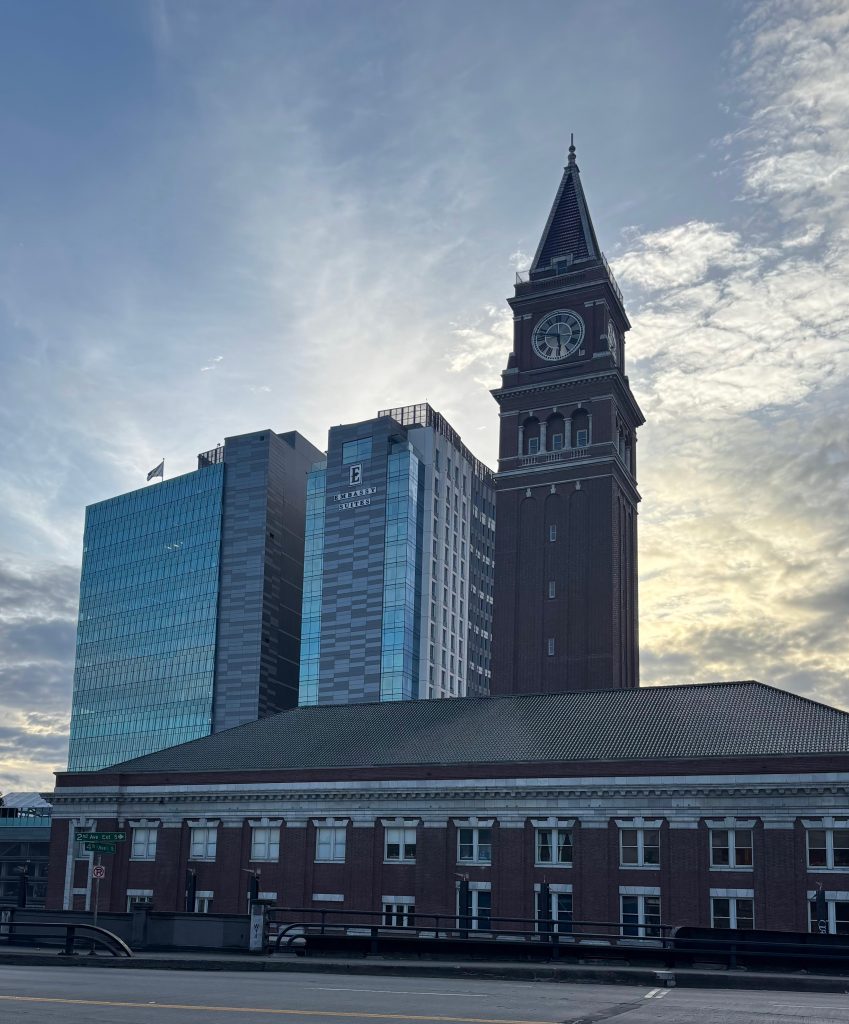
King Street Station, built between 1904 and 1906, is a stunning blend of classic revivalist and Beaux-Arts styles designed by Charles Reed. Its 250-foot clock tower, inspired by Venice’s St. Mark’s Campanile, dominates Seattle’s skyline.
The station’s ornate plasterwork and stained-glass windows reveal intricate craftsmanship preserved through a major 2003 renovation.
Once neglected during rail travel’s decline, it now stands as a downtown gateway, close to stadiums and local eateries, making it a must-see architectural landmark.
8. Pacific Tower
Pacific Tower, located on Broadway in Seattle’s First Hill neighborhood, stands out with its sleek modernist design and 278-foot height.
Originally built in 1932 as a hospital, it features a striking blend of Art Deco and Northwest modern styles.
Today, it houses medical offices and community services, preserving its historical significance while serving contemporary needs.
The tower’s clean lines and functional form contribute to Seattle’s architectural diversity, making it a notable landmark beyond the downtown core.
9. Ward House
Constructed in 1882, the Ward House is Seattle’s oldest residence and a prime example of Italianate Victorian architecture. Situated atop Capitol Hill at 1427 Boren Avenue, it was designed and built by George W. Ward.
After years of neglect and planned demolition in the 1980s, Historic Seattle preserved the structure, restoring it fully by 1986.
Today, the Ward House combines historic charm with modern updates, housing offices like Tola Capital while maintaining its landmark status on both national and city registers.
10. 1201 Third Avenue
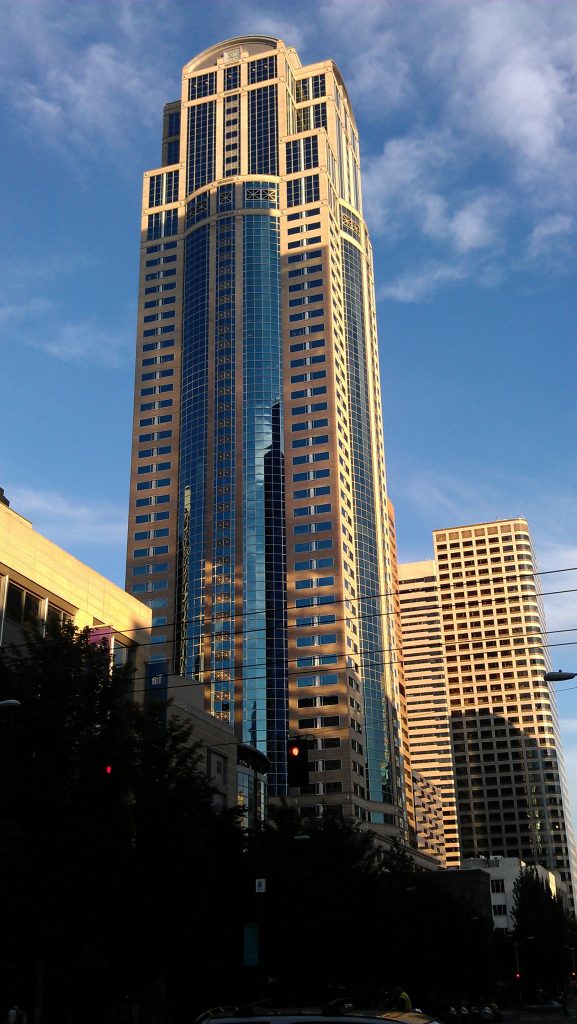
1201 Third Avenue stands as a prominent office skyscraper in Seattle’s downtown core. Completed in 1988, it rises 454 feet with 34 floors, showcasing a sleek postmodern design.
The building features reflective glass and steel, blending seamlessly with nearby landmarks like the Space Needle and Columbia Center. Operated by a leading property manager, it serves as a hub for major businesses.
Its central location and modern amenities make 1201 Third Avenue a key part of Seattle’s dynamic skyline and commercial landscape.
Alicia Richards