Florence stands as a timeless treasure trove of architectural marvels that capture the essence of Renaissance brilliance.
Among its many attractions, the city boasts a collection of iconic buildings that reflect its rich history and artistic heritage.
These structures not only showcase innovative design but also tell stories of power, faith, and creativity that shaped Florence into a cultural beacon.
From the soaring dome of the Cathedral of Santa Maria del Fiore to the stately Palazzo Vecchio, each building offers a unique glimpse into the city’s past.
Exploring these landmarks reveals the harmony and elegance that define Florentine architecture. For travelers and history enthusiasts alike, discovering the ten most famous buildings in Florence promises an unforgettable journey through time and art.
1. Florence Cathedral
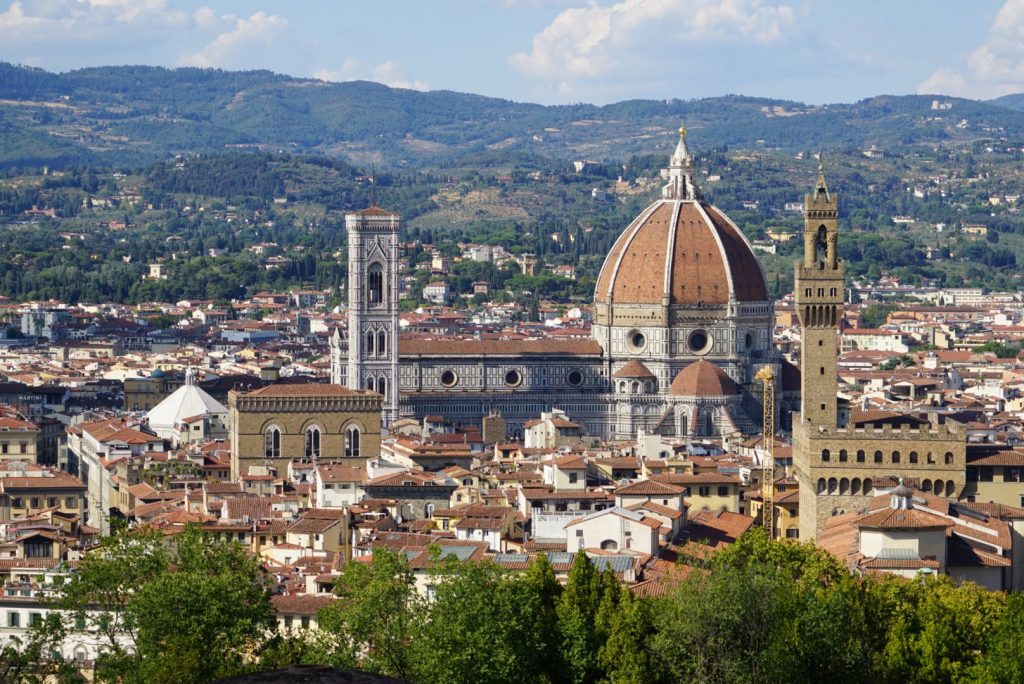
Florence Cathedral, or the Cathedral of Santa Maria del Fiore, stands as the city’s most iconic landmark. Completed in 1436 after 140 years of construction, it ranks as the third largest cathedral globally.
Its striking green, pink, and white marble facade showcases exceptional Gothic and Renaissance artistry. Inside, Brunelleschi’s dome, the largest ever built, captivates visitors with its innovative engineering and grandeur.
The cathedral accommodates up to 20,000 people, reflecting Florence’s historical power and artistic legacy.
2. Palazzo Vecchio
Standing as Florence’s historic town hall, Palazzo Vecchio symbolizes the city’s political power since the 14th century. Its fortress-like exterior features crenellated walls and a towering Arnolfo Tower rising 95 meters high.
Inside, visitors find grand halls adorned with Renaissance art, including masterpieces by Giorgio Vasari. The Salone dei Cinquecento, the largest room, impresses with its vast size and elaborate frescoes.
Palazzo Vecchio also offers underground archaeological tours and panoramic views from the tower, making it a must-see for history and architecture enthusiasts.
3. Pitti Palace
Explore the Pitti Palace, a vast Renaissance palace once home to the powerful Medici family. It features grand rooms and expansive galleries showcasing masterpieces from the Palatine Gallery and the Gallery of Modern Art.
Visitors can admire lavish art collections spanning Renaissance to modern works. The palace’s architecture reflects Florentine elegance with harmonious proportions and intricate details.
Surrounding the palace, the Boboli Gardens offer lush landscaping and breathtaking city views. Together, the Pitti Palace and its gardens highlight Florence’s rich cultural heritage and artistic prestige.
4. Basilica of Santa Maria Novella
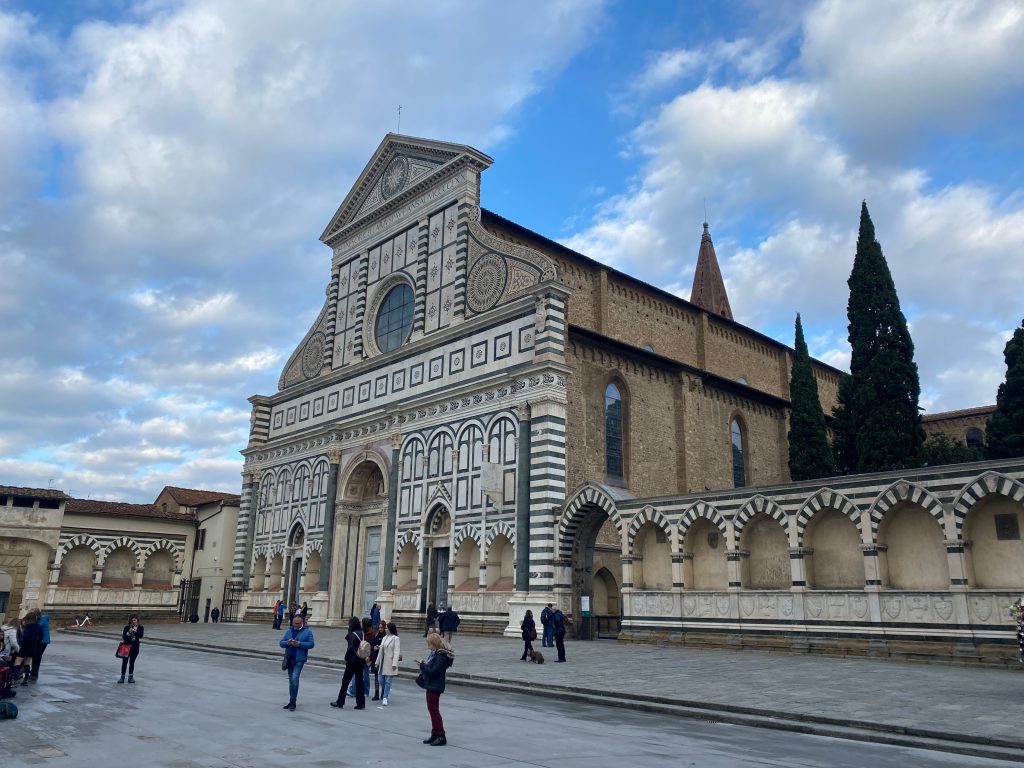
The Basilica of Santa Maria Novella is one of Florence’s earliest great basilicas, renowned for its striking Gothic-Renaissance facade featuring green and white marble.
Known as the main Dominican church, it houses numerous art treasures and funerary monuments. Visitors admire its harmonious design by Leon Battista Alberti and masterpieces by artists such as Masaccio and Ghirlandaio.
Located near the city center, the basilica stands as a testament to Florence’s rich religious and artistic history, making it a vital stop for those exploring the city’s iconic buildings.
5. Florence Baptistery
The Florence Baptistery, one of the city’s oldest landmarks, stands prominently in Piazza del Duomo. Its octagonal shape and Romanesque style demonstrate the evolution of Italian architecture.
The structure features striking bronze doors known as the “Gates of Paradise,” crafted by Lorenzo Ghiberti. Inside, intricate mosaics adorn the ceiling, illustrating biblical scenes.
The Baptistery’s historical and artistic significance makes it a crucial stop for visitors exploring Florence’s architectural heritage.
6. Uffizi Gallery
The Uffizi Gallery stands as one of the most important art museums globally and a prime example of Renaissance architecture.
Designed by Giorgio Vasari in the 16th century, its elongated structure along the Arno River is home to masterpieces by Leonardo da Vinci, Botticelli, and Michelangelo.
Visitors explore its vast collection of paintings and sculptures, tracing the evolution of Italian art. The gallery’s elegant corridors and historic rooms create a unique atmosphere, making it essential for art lovers visiting Florence.
7. Giotto’s Campanile
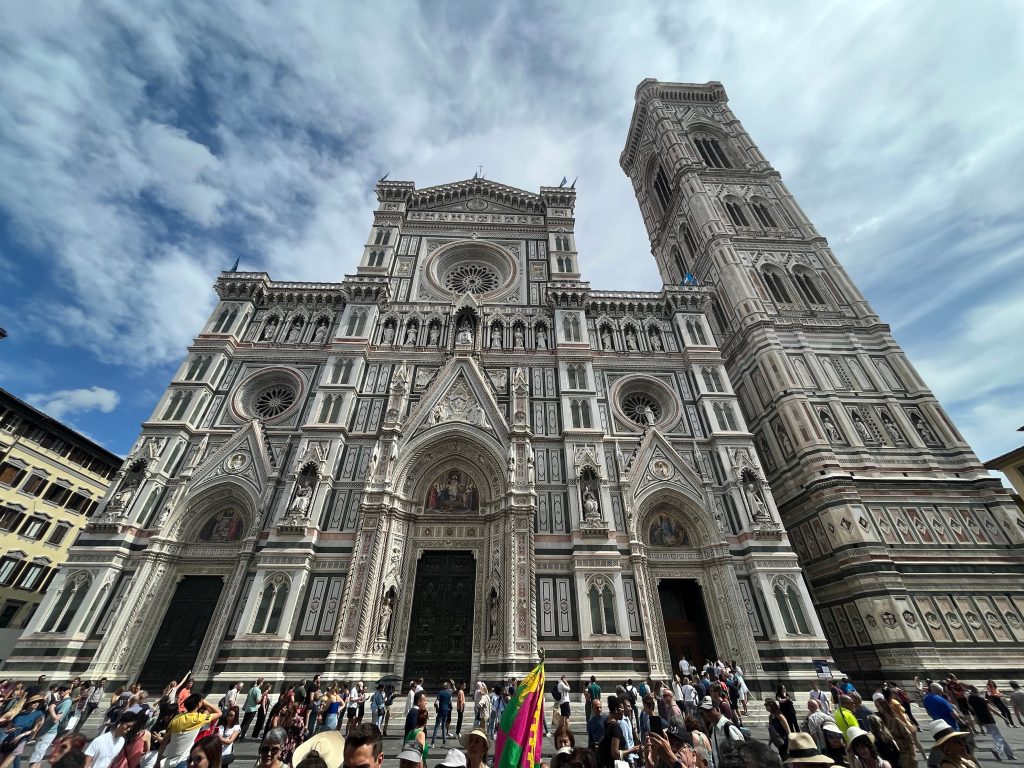
Giotto’s Campanile, a 278-foot tall bell tower adjacent to Florence Cathedral, showcases exquisite Florentine Gothic architecture.
Completed in the 14th century, it features five distinct stages decorated with polychrome marble and intricate sculptures. Visitors can climb 414 narrow, steep steps to enjoy panoramic city views.
The tower’s base is adorned with bas-reliefs depicting themes like creation and virtues, crafted by Giotto and his workshop.
Open daily from 8:15 a.m. to 6:50 p.m., entry costs $23 and includes access to other cathedral monuments, valid for 72 hours.
8. Basilica di San Lorenzo
The Basilica di San Lorenzo is one of Florence’s oldest churches and the Medici family’s burial place. Its Renaissance design by Filippo Brunelleschi highlights elegant proportions and classical elements.
The basilica features a vast interior with Corinthian columns and a simple yet majestic façade. Visitors admire its chapels, including the Medici Chapels, adorned with sculptures by Michelangelo.
San Lorenzo’s historical importance and architectural beauty make it a key stop in Florence’s rich cultural landscape.
9. San Miniato al Monte
San Miniato al Monte stands on a hill overlooking Florence, offering stunning panoramic views. Built in the 11th century, this Romanesque basilica showcases a striking green and white marble facade and intricate geometric patterns.
Its interior boasts remarkable frescoes depicting biblical scenes and a mosaic of Christ triumphed over death.
The church’s peaceful cloisters and the adjoining cemetery hold the tombs of notable Florentines. San Miniato al Monte symbolizes Florence’s medieval spiritual heritage and architectural finesse.
10. Basilica di Santa Croce
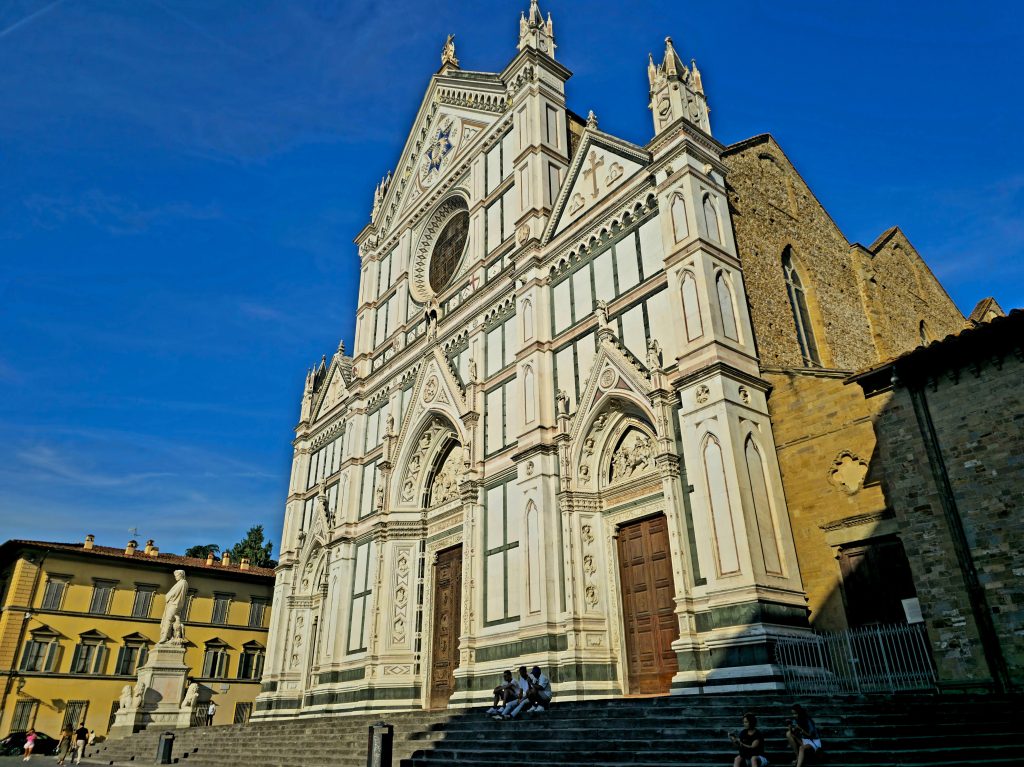
Basilica di Santa Croce, known as the Temple of the Italian Glories, is Florence’s largest Franciscan church.
It features a striking Gothic façade made of white and green marble. Inside, it houses the tombs of luminaries like Michelangelo, Galileo, and Machiavelli.
The basilica boasts impressive frescoes by Giotto and a beautiful leather school founded within its cloisters. Its vast interior and artistic heritage make it a must-visit landmark reflecting Florence’s cultural and historical richness.
Alicia Richards