Greece’s ancient temples stand as stunning reminders of a civilization that shaped history, culture, and architecture.
These awe-inspiring structures, built as places of worship and reverence for gods and goddesses, reveal stories of a time when mythology and daily life were deeply intertwined.
Visitors today can explore these architectural marvels and experience the grandeur of ancient Greek heritage firsthand.
From the iconic Parthenon perched atop the Acropolis to the majestic Temple of Zeus, Greek temples showcase unique styles like Doric, Ionic, and Corinthian.
Each temple offers a glimpse into the past through its massive columns and intricate designs. Discovering these famous temples provides a fascinating journey into the heart of ancient Greece’s spiritual and cultural world.
1. Temple of Olympian Zeus
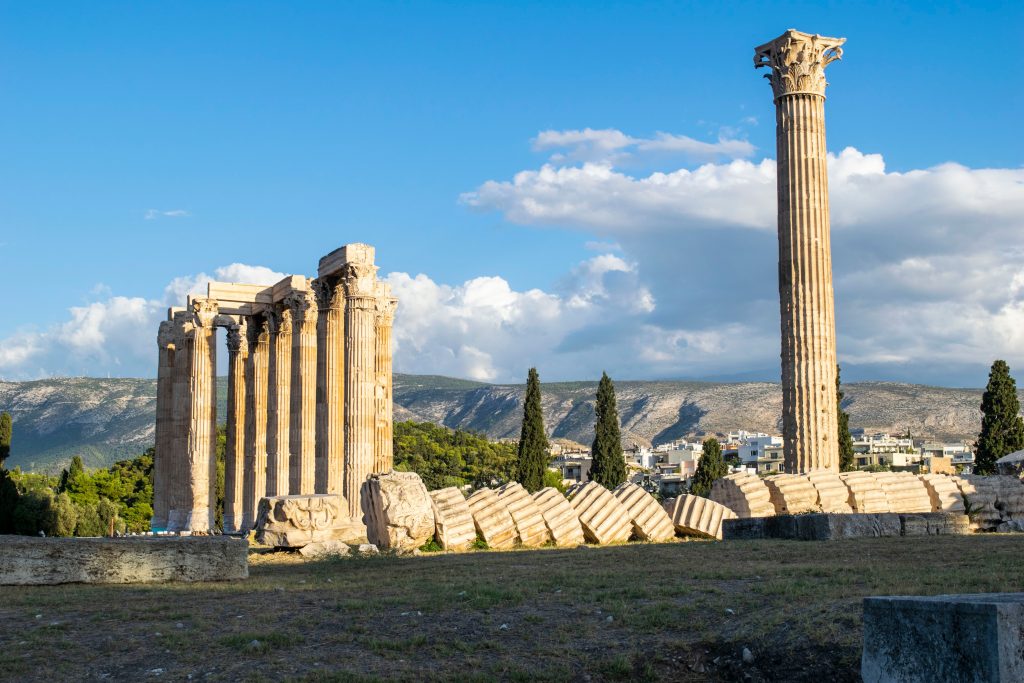
The Temple of Olympian Zeus in Athens stands as one of the largest ancient Greek temples ever built. Construction began in the 6th century BC but wasn’t completed until the Roman era, over 600 years later.
It features 104 massive Corinthian columns, each 17 meters tall, symbolizing the grandeur of Zeus, the king of gods.
Although only 15 columns remain, the temple’s scale and design showcase ancient architectural innovation and religious significance. Visitors can explore its impressive ruins while enjoying views of the Acropolis nearby.
2. Erechtheion
The Erechtheion, located on the northern side of the Acropolis, is renowned for its unique asymmetrical design.
Built in the 5th century BC, it honored both Athena and Poseidon, reflecting important myths of Athens.
Its Ionic columns contrast with the simpler Doric style seen in other temples. The Porch of the Maidens, featuring six elegant female figures as supporting columns, is a striking architectural highlight.
Despite centuries of damage, the Erechtheion remains an iconic example of ancient Greek craftsmanship and religious significance.
3. Temple of Zeus, Olympia
Situated in the Peloponnesus valley, the Temple of Zeus in Olympia was completed in 457 BC after 13 years of construction.
Known for housing one of the Seven Wonders of the Ancient World—a colossal 41-foot gold and ivory statue of Zeus—it symbolized Greek devotion to their chief god.
The hexastyle limestone temple featured marble sculptures and hosted the Olympic Games every four years starting in 776 BC.
Though partially destroyed by earthquakes, its remaining columns and ruins reveal its massive scale and Olympic heritage.
4. Temple of Aphaia
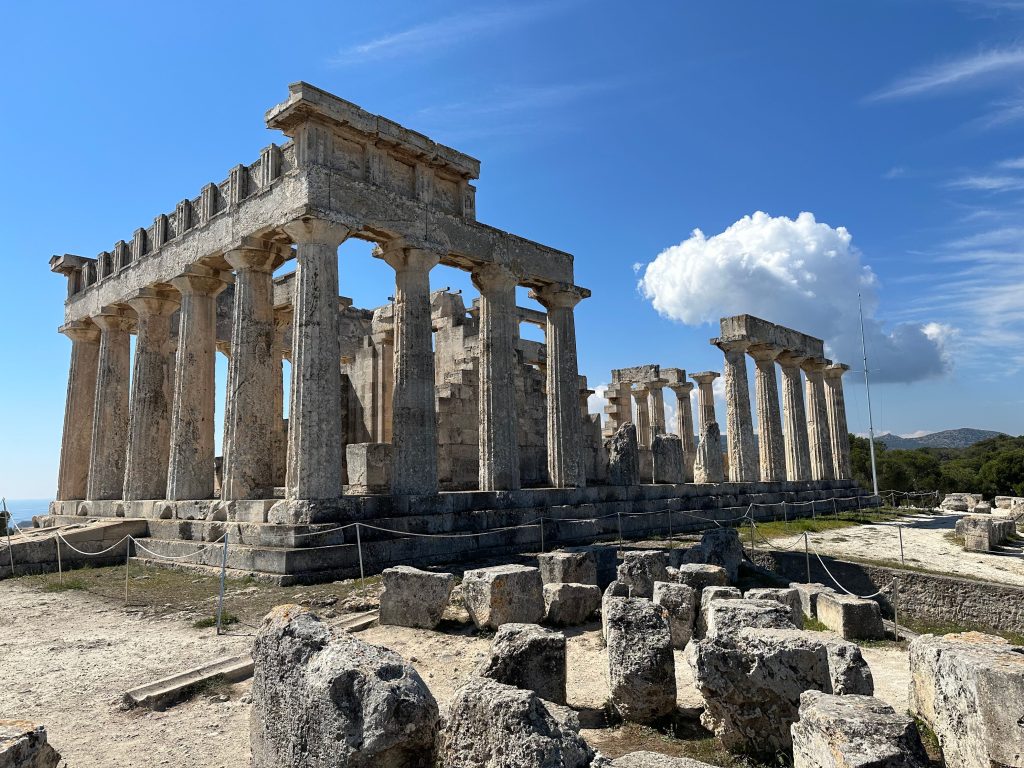
Standing on the Greek island of Aegina, the Temple of Aphaia is a remarkable example of Doric architecture from around 500 BC.
Dedicated to the goddess Aphaia, this temple showcases a harmonious blend of archaic and classical styles.
It features 32 sturdy columns supporting its structure, emphasizing symmetry and proportion. The temple’s well-preserved sculptures depict mythological battles, revealing artistic excellence.
Its elevated location offers panoramic views of the surrounding sea, making it both a spiritual and scenic landmark. The Temple of Aphaia remains crucial for understanding the evolution of Greek temple design.
5. Temple of Artemis, Corfu
Built around 580 BC in Corfu’s Garitsa suburb, the Temple of Artemis is one of the earliest fully Doric stone temples.
Dedicated to Artemis, this archaic temple showcases massive limestone columns and a monumental pediment—the earliest known significant stone sculpture group in Greece.
Discovered during Napoleonic Wars trench digging, it gained archaeological attention during Kaiser Wilhelm II’s 19th-century excavations.
The temple’s design marks a key evolution from wooden to stone architecture, setting a precedent for classical Greek temple construction.
6. Temple of Isthmia
The Temple of Isthmia, dedicated to Poseidon, stands near the Isthmus of Corinth. Excavations reveal a temple dating back to the 7th century BC, built in the Doric style. It played a vital role during the Isthmian Games, attracting pilgrims and athletes.
The temple’s ruins show a rectangular design with massive stone columns. Despite damage from earthquakes, the site reflects ancient religious practices and regional significance.
Visitors today appreciate its connection to maritime worship and the strategic location controlling land and sea routes in ancient Greece.
7. Temple of Artemis
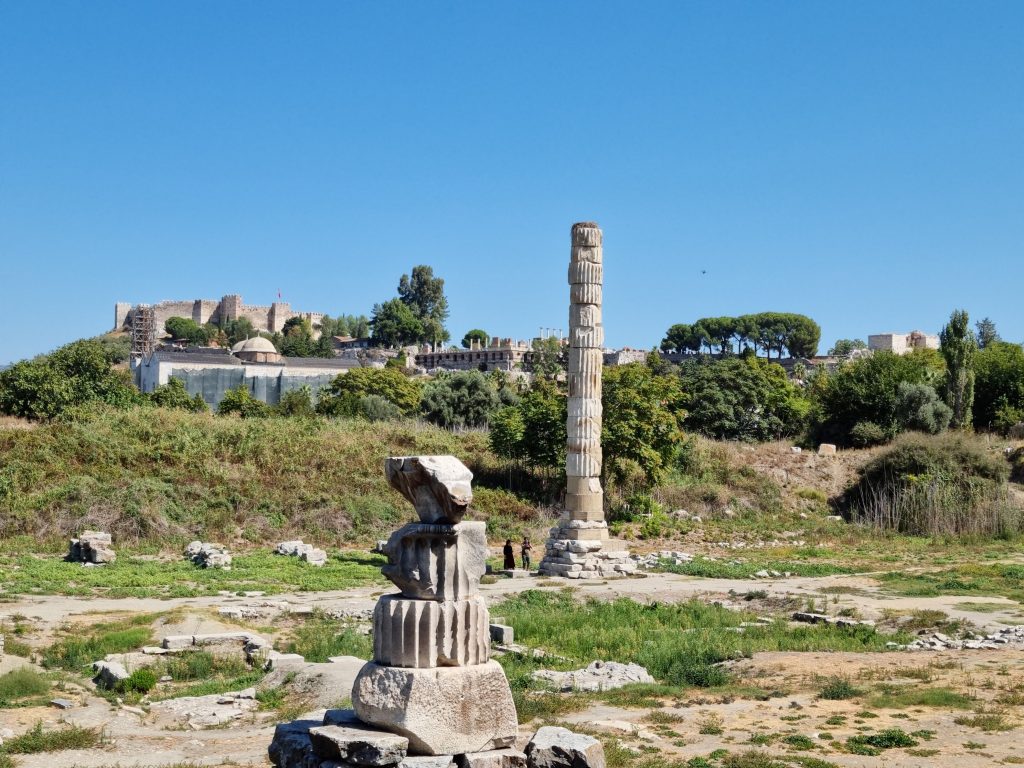
Known for its colossal size and intricate ornamentation, the Temple of Artemis featured Ionic columns about 18 meters (60 feet) tall with elaborately sculpted capitals.
Dedicated to Artemis, the goddess of the hunt, the temple housed numerous statues and treasures in a vast courtyard.
Pilgrims across the Greek world visited to offer votive gifts and seek blessings. Though it was destroyed by the Goths in 267 CE and met final ruin in the 5th century CE, its architectural grandeur and religious significance remain legendary.
8. Old Temple of Athena
Located on the Acropolis, the Old Temple of Athena dates back to the 6th century BC. It served as a precursor to the Parthenon and was dedicated to Athena Polias, the city’s patron goddess.
Constructed with massive marble columns, this Doric-style temple housed cult images and votive offerings central to Athenian worship.
Although now in ruins, the temple’s foundation reveals early Greek sculptural artistry and religious practices, marking a key phase in the architectural and spiritual history of ancient Athens.
9. Temple of Apollo Epicurius
Located in the remote mountains of Arkadia, the Temple of Apollo Epicurius was built between 420 and 400 BC by Iktinos. It uniquely blends Doric, Ionic, and Corinthian orders, with the oldest Corinthian capital ever found inside.
Unlike typical east-west orientation, this temple aligns north-south. Its well-preserved structure highlights daring architecture and is dedicated to Apollo, the god of healing and the sun.
Visitors can explore this UNESCO World Heritage Site, protected by a tent, and admire its blend of archaic and classical Greek styles.
10. Temple of Poseidon at Sounion
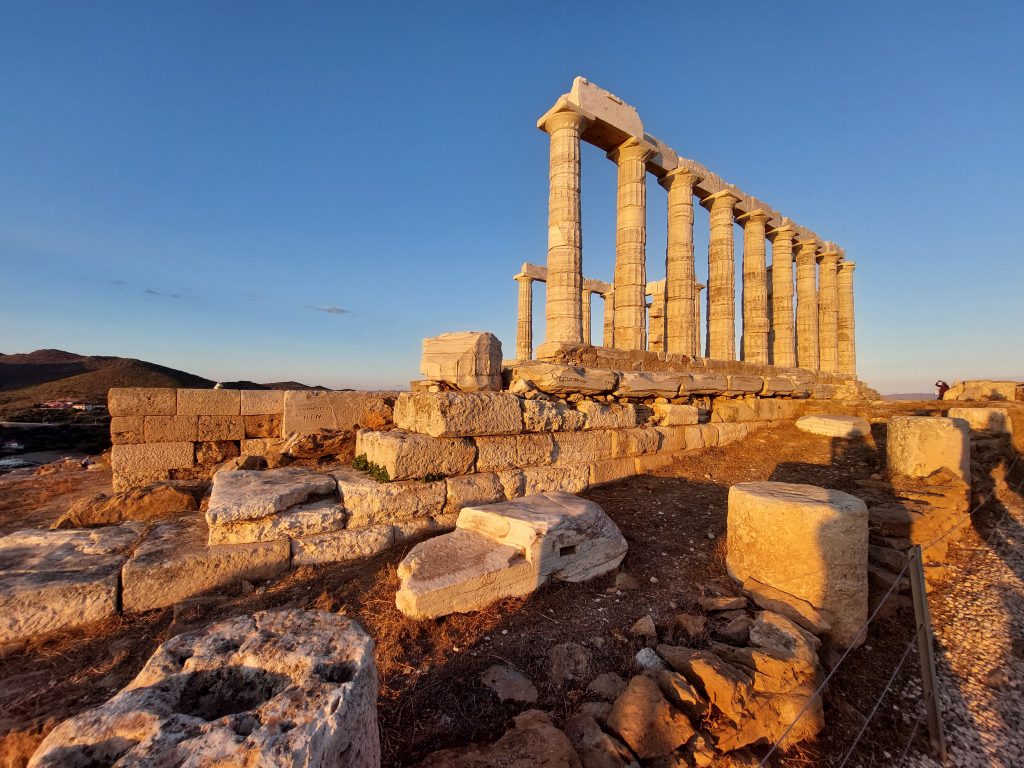
Perched on Cape Sounion’s southern tip, the Temple of Poseidon dates to around 440 BC. Constructed from Agrileza marble, it originally featured 34 Doric columns; 15 remain today.
Serving as a sanctuary for Poseidon, god of the sea, it also guided ancient sailors back to Attica. The temple’s hexastyle front portico and rectangular colonnade overlook the Aegean Sea from 70 meters above.
Part of Greece’s Sacred Triangle, it aligns with the Parthenon and the Temple of Aphaia, making it a key cultural and architectural landmark.
Alicia Richards