Suspension bridges have long captured human imagination by combining engineering brilliance with stunning aesthetics.
These structures span vast distances while supporting heavy moving loads, solving complex geographical challenges with elegance and strength.
Beyond their practical role in transportation, many suspension bridges have become iconic symbols that define city skylines and attract millions of visitors each year.
From early rope spans to modern marvels held together by millions of steel rivets, suspension bridges represent milestones in innovation and design.
Their ability to balance form and function has led to record-breaking lengths and heights that continue to push engineering limits.
1. Akashi-Kaikyo Bridge
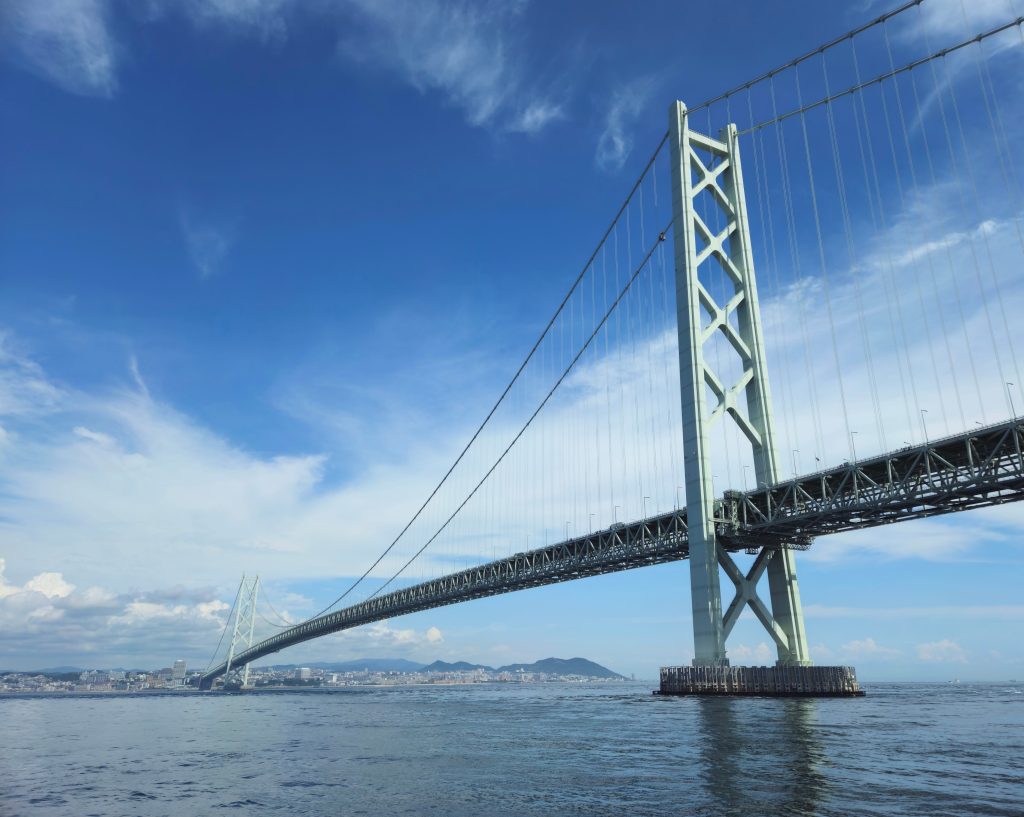
The Akashi-Kaikyo Bridge in Japan holds the record as the world’s longest suspension bridge, stretching 1.991 miles (3.191 kilometers) across the Akashi Strait.
It connects Awaji Island to Kobe on the Japanese mainland and symbolizes a major engineering achievement.
Construction involved two million workers over ten years, showcasing advanced steel cable technology that ensures stability even if a cable fails.
Designed to withstand harsh weather and earthquakes, this bridge demonstrates the pinnacle of suspension bridge innovation.
2. Golden Gate Bridge
The Golden Gate Bridge stands as an iconic symbol of San Francisco and engineering innovation.
Designed by architect Irving Morrow, its vivid international orange color enhances visibility in dense fog and contrasts with the Pacific Ocean’s blue.
Weighing heavier than the Empire State Building, it is secured by 12 million steel rivets. When it opened, it was the longest suspension bridge globally, supporting 4,000 pounds per foot.
Today, it remains a major tourist attraction and a landmark of world-class suspension bridge engineering.
3. Brooklyn Bridge
Opened in 1883, the Brooklyn Bridge connects Manhattan and Brooklyn, spanning nearly 6,000 feet over the East River. It is one of the oldest hybrid suspension-cable-stayed bridges in the U.S. and was the first to use steel cables.
Designed to be six times stronger than necessary, it still carries over 125,000 vehicles daily. The bridge’s iconic towers were once New York’s tallest structures.
It’s a National Historic Landmark and a symbol of New York’s architectural innovation and cultural heritage, currently undergoing renovation to preserve its legacy.
4. Clifton Suspension Bridge
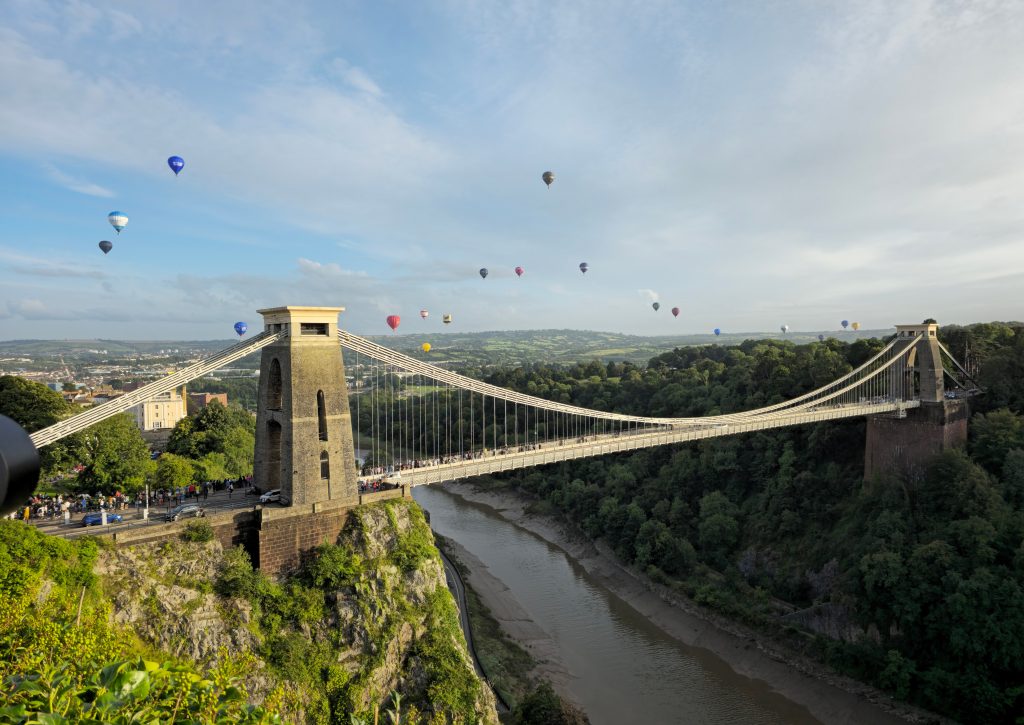
Spanning the Avon Gorge in Bristol, England, the Clifton Suspension Bridge is a landmark of Victorian engineering and design.
Designed by Isambard Kingdom Brunel, it opened in 1864 and stretches 702 feet (214 meters) with a height of 245 feet (75 meters) above the river, showcasing innovative use of wrought iron chains and masonry towers.
This bridge not only serves as a vital traffic link but also as a symbol of the city’s industrial heritage and architectural elegance.
Its suspension design effectively distributes load through cables anchored in the stable sides of the gorge, blending aesthetics with engineering precision.
5. Xihoumen Bridge
Constructed in Zhejiang province, the Xihoumen Bridge showcases modern suspension engineering with a main span of 1,650 meters (5,413 feet).
Built between 2005 and 2009 at a cost of approximately 363 million USD, it ranks among the world’s longest suspension bridges. The bridge supports heavy traffic and connects key islands, boosting regional transportation.
Its opening was delayed slightly due to a ship collision damaging a nearby bridge, but it remains a major milestone in China’s infrastructure development.
The Xihoumen Bridge blends advanced design with impressive scale, highlighting evolving global engineering standards.
6. Humber Bridge
Spanning 7,410 feet (2,256 meters) across the Humber Estuary in England, the Humber Bridge was the longest suspension bridge globally from 1981 to 1998.
It connects East Yorkshire and North Lincolnshire, easing transport bottlenecks and supporting daily commuter and freight traffic.
The bridge’s two main towers rise 538 feet (164 meters), anchoring cables designed to withstand strong winds and tidal conditions.
Its construction combined steel and concrete innovations, showcasing engineering mastery in tackling challenging geography while becoming a vital regional landmark.
7. Tsing Ma Bridge
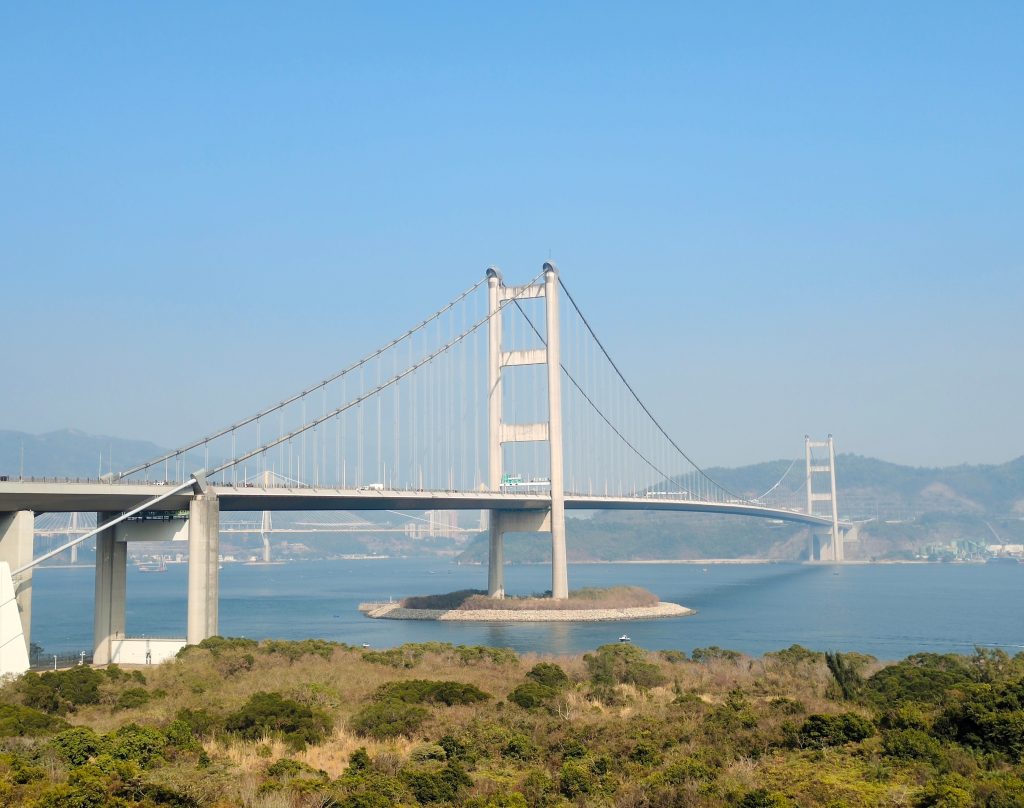
Stretching 7,596 feet (2,2 km), the Tsing Ma Bridge in Hong Kong ranks among the world’s longest suspension bridges. It uniquely combines road and rail transport, supporting six lanes of traffic and a double-track railway beneath.
Designed to withstand typhoons and earthquakes, its two 680-foot (208-meter) towers anchor massive steel cables securing the deck. Opened in 1997, the bridge connects Lantau Island to the urban center, boosting regional mobility and commerce.
Its engineering excellence and multi-functionality make the Tsing Ma Bridge a vital Hong Kong landmark and a model of innovation in suspension bridge design.
8. Mackinac Bridge
The Mackinac Bridge stretches nearly 5 miles, linking Michigan’s Lower and Upper Peninsulas. Opened in 1957, its 3,800-foot main span ranks as the third-longest in the U.S.
The bridge’s central span of 1,158 meters makes it the longest suspension bridge with two towers between anchorages in the Western Hemisphere.
Designed by David B. Steinman, it replaced ferries and significantly eased traffic congestion across the Straits of Mackinac.
Its simple design conceals remarkable engineering that withstands harsh Great Lakes weather while connecting vital regional communities.
9. Osmangazi Bridge
The Osmangazi Bridge spans the Gulf of İzmit in Türkiye, connecting Gebze and Yalova provinces. It features a central suspension span of 1,550 meters (5,090 feet), ranking among the longest worldwide.
Opened in 2016, its two steel pylons reach 252 meters tall, supporting eight traffic lanes. The bridge drastically cuts travel time from 60 to 6 minutes, boosting regional connectivity and commerce.
Built by a Turkish-Italian consortium, the project cost 11 billion Turkish lira. This engineering feat combines advanced suspension techniques with efficient design, making it a vital transportation link and national landmark.
10. Tower Bridge
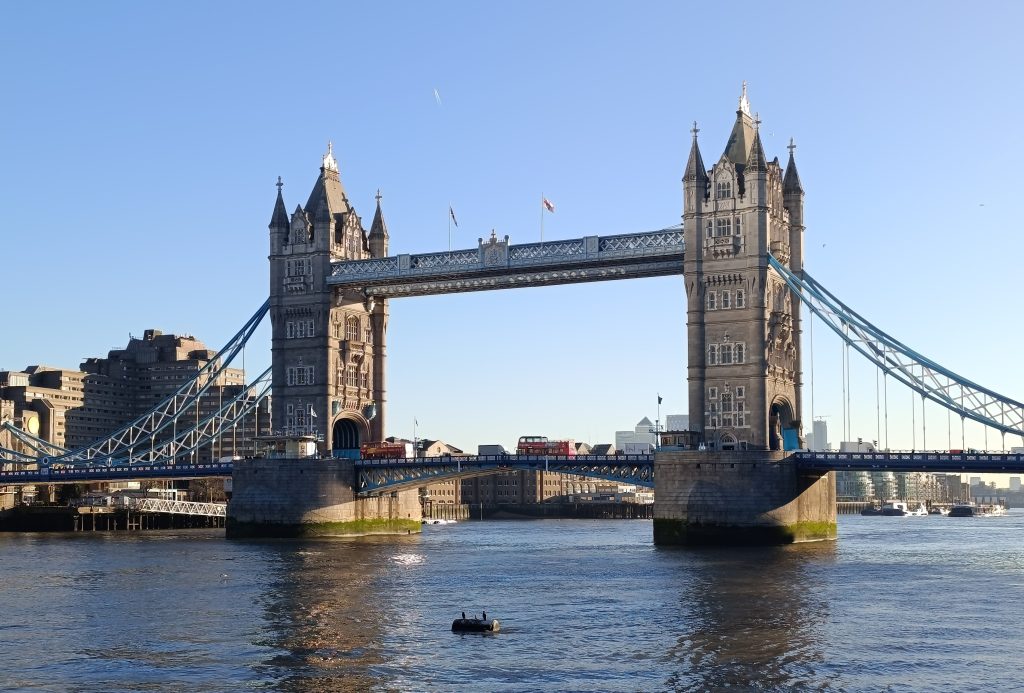
Tower Bridge in London combines suspension and bascule designs to span the River Thames. Built in the late 19th century, it features two massive Gothic Revival towers linked by high-level walkways.
The bridge’s movable bascules lift to allow ships to pass, highlighting advanced engineering for increased commercial traffic.
Named after the nearby Tower of London, this landmark remains an iconic symbol of London’s architectural heritage and continues to serve both transportation and tourism needs.
Alicia Richards