There’s something awe-inspiring about towering skyscrapers that define a city’s skyline and character.
These architectural giants not only offer breathtaking views from dizzying heights but also reflect the culture and identity of their surroundings.
To be considered a true skyscraper, a building must stand at least 150 meters tall and be mostly self-supporting and occupied.
From the iconic Empire State Building in New York to the record-breaking Burj Khalifa in Dubai, skyscrapers captivate millions of visitors each year.
Whether it’s an observation deck, a rooftop bar, or a unique design, these structures invite people to experience cities from a new perspective.
1. Empire State Building
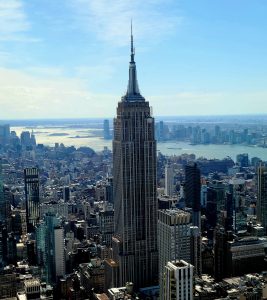
The Empire State Building stands at 1,250 feet and was the tallest building globally for 40 years after its completion in 1931. Located in New York City, it boasts 102 floors and an iconic Art Deco design by Shreve, Lamb & Harmon.
The building attracts over 4 million visitors annually to its observation decks, offering panoramic city views.
Featured in more than 250 movies—including King Kong and Sleepless in Seattle—it remains a symbol of New York’s skyline and architectural heritage.
2. Burj Khalifa
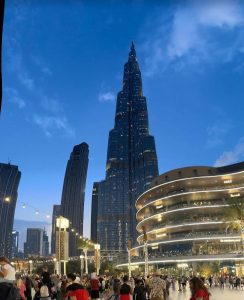
Standing at 2,722 feet (829.8 meters), the Burj Khalifa is the tallest building in the world since 2010. Located in Dubai, it features 163 floors and includes the highest outdoor observation deck, tallest service elevator, and highest occupied floor globally.
Its design, inspired by Islamic architecture and the Great Mosque of Samarra, combines cultural elements with modern engineering.
The tower anchors a downtown area, with a mixed-use program supporting urban density and direct connections to mass transit. Its iconic silhouette redefines skyscraper design and urban living.
3. Chrysler Building
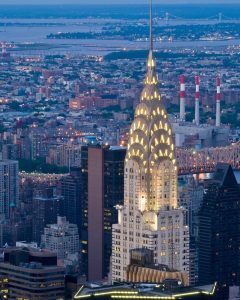
Rising 1,047 feet in New York City, the Chrysler Building was briefly the world’s tallest structure in 1930. This Art Deco masterpiece, designed by William Van Alen, features a signature spire inspired by a radiator cap.
With 77 floors and 32 Otis elevators, its interior reflects automotive motifs from the 1930s. Although its observation deck closed in 1945, the lobby—home to the city’s first digital clock and a stunning mural ceiling—remains a must-see.
The Chrysler Building remains an icon of American industrial ambition and exquisite Art Deco design.
4. Willis Tower
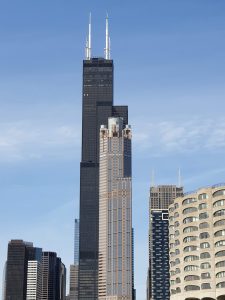
The Willis Tower in Chicago stands 1,450 feet tall with 108 floors, making it one of the tallest buildings worldwide since its completion in 1973. Formerly known as the Sears Tower, it held the title of the tallest building for 25 years.
The tower’s iconic Skydeck on the 103rd floor features glass boxes called The Ledge, offering breathtaking views and the thrilling sensation of standing in midair.
Visitors can also experience the building’s subtle sway on windy days while enjoying panoramic sights over Lake Michigan and the Illinois plains.
5. Shanghai World Financial Center
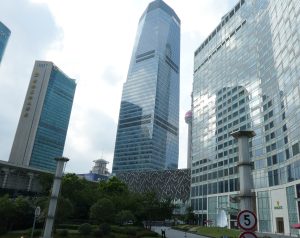
The Shanghai World Financial Center stands as a symbol of commerce and culture in Shanghai. Its design blends two shapes—a square prism and intersecting arcs—representing ancient Chinese symbols of earth and heaven.
The tower’s tapering form creates large office floors at its base and hotel rooms near the top. Its standout feature, a 50-meter-wide aperture near the peak, reduces wind pressure on the structure, enhancing stability.
This 492-meter skyscraper exemplifies efficient design and cultural symbolism within Shanghai’s iconic skyline.
6. One World Trade Center
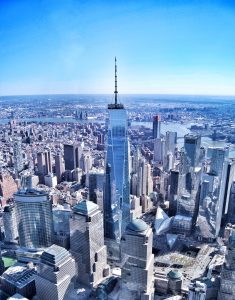
One World Trade Center, also known as the Freedom Tower, stands at 1,776 feet in New York City, making it the tallest building in the Western Hemisphere. Completed in 2014, it symbolizes resilience and renewal after the 9/11 attacks.
The tower features 104 floors, advanced safety systems, and sustainable design elements. Its observation deck offers panoramic views of Manhattan and beyond, attracting millions annually.
Designed by Skidmore, Owings & Merrill, One World Trade Center combines modern architecture with deep historical significance, serving as a beacon of hope and strength for the city and the nation.
7. The Shard
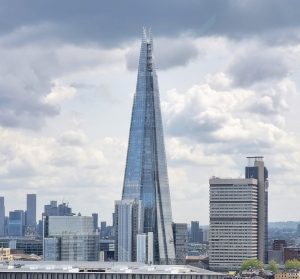
Standing at 1,016 feet, The Shard is the tallest building in London and all of Europe, excluding Russia.
Designed by Renzo Piano and completed in 2012, it features a distinctive glass pyramid shape inspired by eighteenth-century London paintings.
Visitors can access panoramic views from its observation deck, reached via high-speed lifts or by climbing stairs to the glass walkway.
Replacing Southwark Towers, The Shard symbolizes modern architectural innovation and offers sweeping views of London’s ever-changing skyline.
8. Shanghai Tower
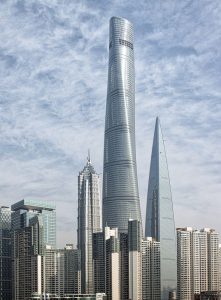
Shanghai Tower rises 2,073 feet, making it China’s tallest and the world’s second tallest building. Its tiered exterior features a double-layered glass façade that reduces heat absorption, boosting energy efficiency.
Designed by Gensler, the tower’s twisting form minimizes wind loads and creates outdoor gardens on several sky lobbies.
It earned the title of the greenest skyscraper for its sustainable systems, including rainwater recycling and geothermal heating.
The tower offers an indoor observation deck on the 118th floor with sweeping views of Shanghai’s skyline and the Huangpu River.
9. Burj Al Arab
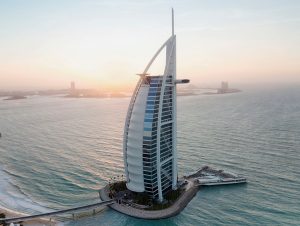
Standing at 321 meters (1,050 feet), Burj Al Arab is the world’s second tallest hotel, located on an artificial island in Dubai. Its sail-shaped design symbolizes the city’s urban transformation and echoes traditional maritime imagery.
Connected by a private curving bridge, the tower’s iconic silhouette is visible from miles away. The hotel features a sky-high restaurant 200 meters above the Persian Gulf and an innovative sky bridge linking its twin towers.
Burj Al Arab set new luxury standards, boasting the tallest atrium and advanced engineering to withstand desert heat and high winds.
10. 30 St. Mary Axe
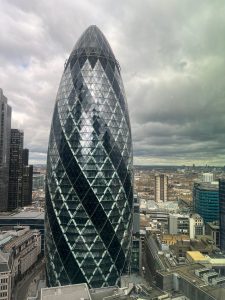
Known as “The Gherkin,” 30 St. Mary Axe stands 180 meters (591 feet) tall with 40 floors in London’s financial district. Designed by Norman Foster and Ken Shuttleworth, its unique curved shape resembles a pickled cucumber.
Completed in 2003, it sparked a skyscraper boom in London and symbolizes the city’s modern, progressive image. The building integrates advanced energy-saving technologies and primarily houses offices.
Initially criticized, it gained popularity, appearing on stamps and Olympic bid posters, solidifying its status as an architectural landmark.
Alicia Richards