Spain’s architectural landscape is a vibrant tapestry woven by visionary architects whose work has shaped modern design worldwide.
From the organic curves of Antoni Gaudí’s masterpieces to Santiago Calatrava’s futuristic structures, Spanish architects have consistently pushed creative boundaries.
Their innovative approaches blend history, nature, and technology, creating iconic landmarks that attract millions.
This article explores ten of the most famous Spanish architects whose contributions have left a lasting impact on architecture.
Their unique styles range from Catalan Modernism to postmodern redevelopment, reflecting Spain’s rich cultural heritage and forward-thinking spirit.
Discover the architects behind some of the country’s most celebrated buildings and learn how their groundbreaking designs continue to inspire the global architectural community.
1. Antoni Gaudí
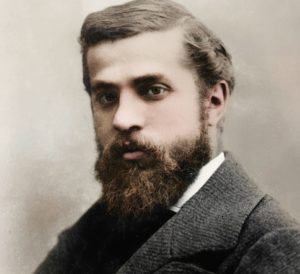
Antoni Gaudí, born in 1852, stands as the foremost figure of Catalan Modernism. His distinctive style blends nature, neo-Gothic art, and Oriental techniques, creating structures with unique forms and vibrant polychromy.
Gaudí’s masterpiece, the Sagrada Familia in Barcelona, remains under construction for over a century and draws millions annually.
Beyond this basilica, his notable works include Park Güell, Casa Batlló, and Casa Milà (La Pedrera).
Gaudí’s passion for detail, combined with techniques like trencadís mosaic, revolutionized architecture and left a lasting legacy in Spanish design.
2. Santiago Calatrava
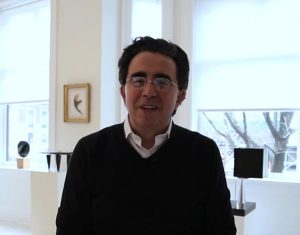
Santiago Calatrava, a Spanish-Swiss architect and engineer, is renowned for his futuristic designs that blend architecture, sculpture, and engineering.
His works feature sweeping curves and skeletal forms inspired by human and animal anatomy, creating a weightless, kinetic appearance.
Notable projects include the City of Arts and Sciences in Valencia, the Milwaukee Art Museum, and the World Trade Center Transportation Hub in New York City. Calatrava’s innovative use of concrete and steel pushes the boundaries of modern architecture globally.
3. Rafael Moneo
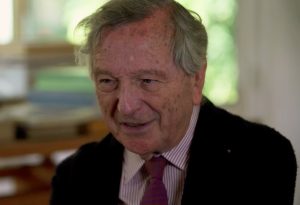
Rafael Moneo is one of Spain’s most respected architects, praised for integrating context, history, and materials into his designs.
He won the Pritzker Prize in 1996, the RIBA Royal Gold Medal in 2003, and the Golden Lion at La Biennale in 2021.
Notable works include the Kursaal Palace in San Sebastián, featuring two glass cubes that harmonize with the sea and hills, and the extension of Madrid’s Prado Museum.
Moneo’s architecture balances innovation with respect for surroundings, influencing global architectural practice.
4. Ricardo Bofill

Ricardo Bofill revolutionized Spanish architecture with his postmodern, utopian designs. He founded Taller de Arquitectura in 1963, transforming it into a global leader in urban design.
Inspired by Mediterranean and North African styles, Bofill combined bold neoclassical forms with futuristic elements.
He pioneered adaptive reuse by converting abandoned industrial structures into monumental complexes, like the iconic La Fábrica.
His work blends surreal visuals with social progress ambitions, leaving a lasting influence on 20th-century architecture worldwide.
5. Alonso Cano
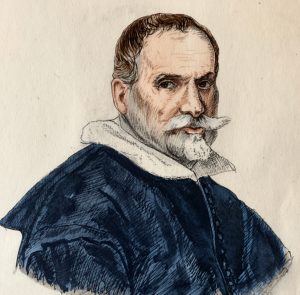
Alonso Cano was a versatile Spanish architect, painter, and sculptor born in Granada in 1601. Learning architecture from his father, Miguel Cano, he quickly gained prominence and became the first royal architect.
His most famous architectural feat is the ornate Baroque façade of the Granada Cathedral, completed in 1667. Cano’s innovative designs blended Italian and Spanish styles with sculptural detail, showcasing his artistic mastery.
Beyond architecture, his expressive religious paintings and wooden sculptures secured his reputation as the “Spanish Michelangelo.” Cano’s legacy remains influential in Spanish art and architecture history.
6. Juan de Herrera
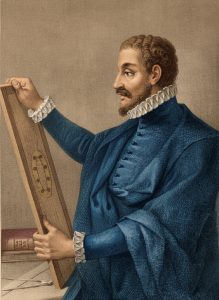
Juan de Herrera (1530–1597) was a pivotal Spanish Renaissance architect whose minimalist Herrera style defined 16th-century Spanish architecture.
Born in Cantabria, he mastered mathematics, geometry, and astronomy, influencing his precise, clean-lined designs. Herrera’s masterpiece, the Monastery of El Escorial near Madrid, exemplifies his sober aesthetic.
He also contributed key structures like Madrid’s Plaza Mayor and Valladolid Cathedral, whose geometric rigor shaped Spanish colonial architecture in Mexico and Peru.
Herrera’s work set a timeless standard, deeply impacting Spain’s architectural legacy during the Habsburg era.
7. Enric Miralles
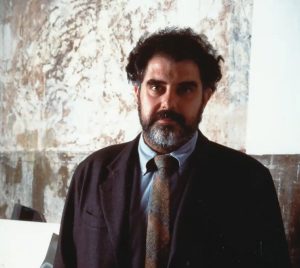
Enric Miralles is celebrated for his expressive and unconventional architectural style that challenges traditional forms.
He embraced dynamic, irregular shapes and eclectic material combinations, producing bold civic projects like Barcelona’s Santa Caterina Market. Miralles infused his designs with emotion and movement, redefining public architecture’s possibilities.
His innovative approach fused avant-garde techniques with contextual sensitivity, making his work a significant influence on contemporary Spanish architecture and urban design.
8. Félix Candela
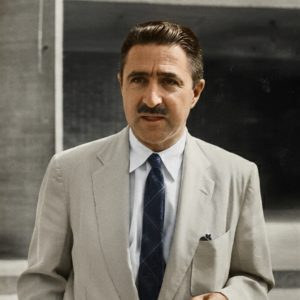
Félix Candela revolutionized architecture with his pioneering thin shell concrete structures known as “cascarones.”
He specialized in creating lightweight, curved surfaces like inverted umbrellas with large cantilevers, combining structural innovation and aesthetic elegance.
Candela’s work significantly impacted both Spanish and Mexican architecture. Collaborating with architects such as Santiago Calatrava, he inspired future generations by blending engineering precision with creative design.
Born in Tudela in 1937, Candela’s visionary approach continues to influence modern architectural engineering worldwide.
9. Alberto Campo Baeza

Alberto Campo Baeza, born in Valladolid and raised in Cádiz, is renowned for his minimalist modernist architecture that emphasizes light, clean lines, and high-quality materials like glass and stone.
His signature “silent architecture” creates peaceful, meditative spaces using white planes and natural light.
Campo Baeza’s landmark projects include the Caja Granada Savings Bank headquarters in Granada and the MA Museum of Memory of Andalucía.
As an influential educator, he has taught at top international architecture schools, shaping Spain’s architectural identity with his refined, elegant designs.
10. Josep Puig i Cadafalch
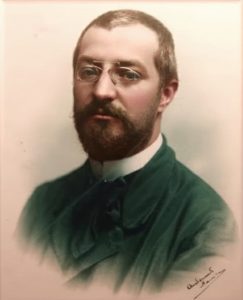
Josep Puig i Cadafalch blended mathematics and natural sciences with Catalan traditions, shaping Modernisme architecture.
His precise, geometrical style emerged during Barcelona’s 1888 Universal Exposition, where his neogothic and Moorish pavilions introduced innovative design ideas.
Known for landmarks like Castell dels Tres Dragons, he combined engineering rigor with creativity.
Additionally, Puig i Cadafalch played a key political role in advancing Catalan regional institutions, making him a significant figure in both architecture and culture. His work profoundly influenced Barcelona’s architectural evolution.
Alicia Richards