Bridges have long been marvels of engineering and design, connecting places and people while showcasing human creativity.
Beyond their practical purpose, many bridges have become iconic landmarks admired for their size, architectural beauty, and historical significance.
These structures tell stories of innovation and cultural importance that continue to captivate travelers and architecture enthusiasts alike.
From ancient stone spans to modern suspension masterpieces, the world’s most famous bridges draw millions of visitors each year.
They not only facilitate transportation but also symbolize the regions they connect, often becoming defining features of their cities.
1. Golden Gate Bridge
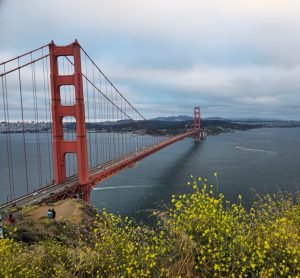
The Golden Gate Bridge spans nearly two miles across the Golden Gate Strait, linking San Francisco with Marin County.
Construction began in 1933 amid the Great Depression, overcoming strong tides, deep waters, and frequent fog.
Known for its 746-foot Art Deco towers and international orange color, the bridge enhances visibility and resists corrosion.
It draws over 10 million visitors annually, serving as both a vital transportation route and an iconic symbol of San Francisco’s skyline and engineering excellence.
2. Tower Bridge
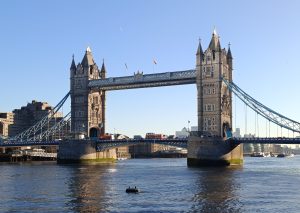
Tower Bridge stands as London’s defining landmark, crossing the River Thames beside the historic Tower of London.
Completed in the late 1800s, it combines suspension, bascule, and static elements supported by two massive towers.
The bridge’s iconic Gothic Revival style features two parallel walkways connected at the top, allowing pedestrians to enjoy panoramic views.
Its bascule design enables the roadway to lift, permitting ships to pass. Built by 432 workers over eight years, Tower Bridge remains a vital crossing and an engineering marvel attracting millions annually.
3. Ponte Vecchio
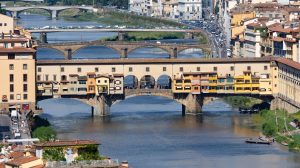
Standing as one of Europe’s oldest stone arch bridges, Ponte Vecchio in Florence dates back to Roman times.
Its medieval structure uniquely houses shops built directly into the bridge, originally butcher stalls now replaced by jewelers, art dealers, and souvenir sellers.
Surviving World War II intact by direct order from Hitler, it remains a symbol of resilience and charm.
Spanning the Arno River, Ponte Vecchio combines historical significance with market life, making it an iconic destination and a testament to medieval engineering.
4. Millau Viaduct

Standing as the world’s tallest viaduct, the Millau Viaduct in France soars 343 meters above the Tarn Valley.
Designed by French engineer Michel Virlogeux and British architect Norman Foster, it features seven concrete piers supporting a four-lane motorway, held by 154 steel cables.
The bridge spans nearly 2,460 meters and took under four years to complete, using 127,000 cubic meters of concrete and 24,000 tons of steel.
Its sleek, cable-stayed design combines engineering brilliance and aesthetic grace, ensuring durability for at least 120 years. A modern marvel, it dramatically improves regional connectivity and offers stunning panoramic views.
5. Brooklyn Bridge

Connecting Manhattan and Brooklyn across the East River, the Brooklyn Bridge is an iconic symbol of American engineering. Completed in 1883, it was the first steel-wire suspension bridge in the world.
Its limestone, granite, and Rosendale cement towers rise with Gothic-inspired arches, supporting steel cables that hold the roadway and an elevated pedestrian walkway.
This design allows tourists and locals to cross safely while enjoying stunning Manhattan skyline views.
Recognized as a National Historic Landmark, the Brooklyn Bridge blends historical significance with cultural impact, featured in countless films and artworks.
6. Sydney Harbour Bridge

Nicknamed The Coathanger for its steel arch design, Sydney Harbour Bridge stands as Australia’s most iconic bridge and ranks among the world’s most famous.
Opened in 1932, it’s the tallest steel arch bridge, reaching 440 feet high, and the sixth longest spanning arch bridge globally.
Measuring 1,650 feet long and 160 feet wide, it carried the title of the world’s widest long-span bridge until 2012.
Daily, it serves rail vehicles, bicycles, and pedestrians, connecting Sydney’s CBD to the North Shore. Tourists can join BridgeClimb Tours, scaling the steel structure for breathtaking views of Sydney Harbour and the Opera House.
7. Rialto Bridge
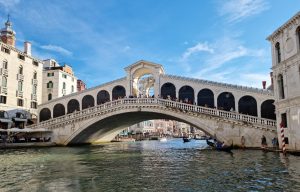
The Rialto Bridge, completed in 1591 by architect Antonio da Ponte, is Venice’s oldest and most iconic stone arch bridge.
Spanning the Grand Canal, it replaced unstable wooden structures with a bold two-inclined-ramp design that many once doubted would stand.
Crafted from light Istrian limestone, it features a single arch supporting shops on both sides.
This Renaissance masterpiece symbolizes Venice’s commercial heritage and remains a tourist attraction, showcasing stunning views of the bustling Rialto Market and the city’s historic waterways.
8. Charles Bridge

Named after King Charles IV, Charles Bridge in Prague spans the Vltava River, connecting the Old Town with Prague Castle.
Construction began in 1357 and finished in the early 15th century, making it a vital medieval trade route between Eastern and Western Europe.
This stone Gothic bridge features 16 arches and is adorned with 30 statues of saints, attracting countless tourists, street artists, and vendors daily.
Its enduring structure and picturesque views make Charles Bridge one of the world’s most visited and historically significant bridges.
9. Akashi-Kaikyo Bridge

Spanning 6,532 feet (1,991 meters), the Akashi-Kaikyo Bridge in Japan holds the world record for the longest central span suspension bridge.
Connecting Awaji Island with Kobe, it was engineered to endure powerful earthquakes and harsh weather, showcasing remarkable seismic resilience.
Its three-part steel structure uses advanced construction techniques to maintain stability and safety.
Serving as a critical link in the Honshu-Shikoku highway, it facilitates efficient transportation, boosts regional trade, and exemplifies engineering excellence at the forefront of modern bridge design.
10. Stari Most
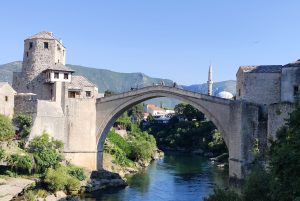
Stari Most, or Old Bridge, is a stunning Ottoman-era bridge in Mostar, Bosnia and Herzegovina, spanning the Neretva River.
Built in 1566, its elegant single arch stood for over 400 years until its destruction in 1993 during the Bosnian War.
Reconstructed and reopened in 2004, it beautifully preserves its original design and symbolizes resilience. Surrounded by lush greenery and scenic hills, the bridge offers picturesque views and a cultural atmosphere.
Young locals often dive into the icy Neretva from the bridge, showcasing a daring tradition that adds to its charm and excitement.
Alicia Richards