Art Deco architecture, with its sleek lines and bold geometry, remains one of the most iconic design styles of the 20th century.
Emerging in the 1920s and 30s, this style symbolized hope and progress during a time of rapid industrial growth and social change.
Its influence can be seen in cities worldwide, from the towering skyscrapers of New York City to the pastel-colored gems of South Beach.
This architectural style combines luxury materials like chrome and marble with stylized motifs, creating buildings that are both elegant and timeless.
Some cities have even embraced Art Deco as a defining part of their identity, boasting landmarks that continue to captivate architects and tourists alike.
1. Chrysler Building
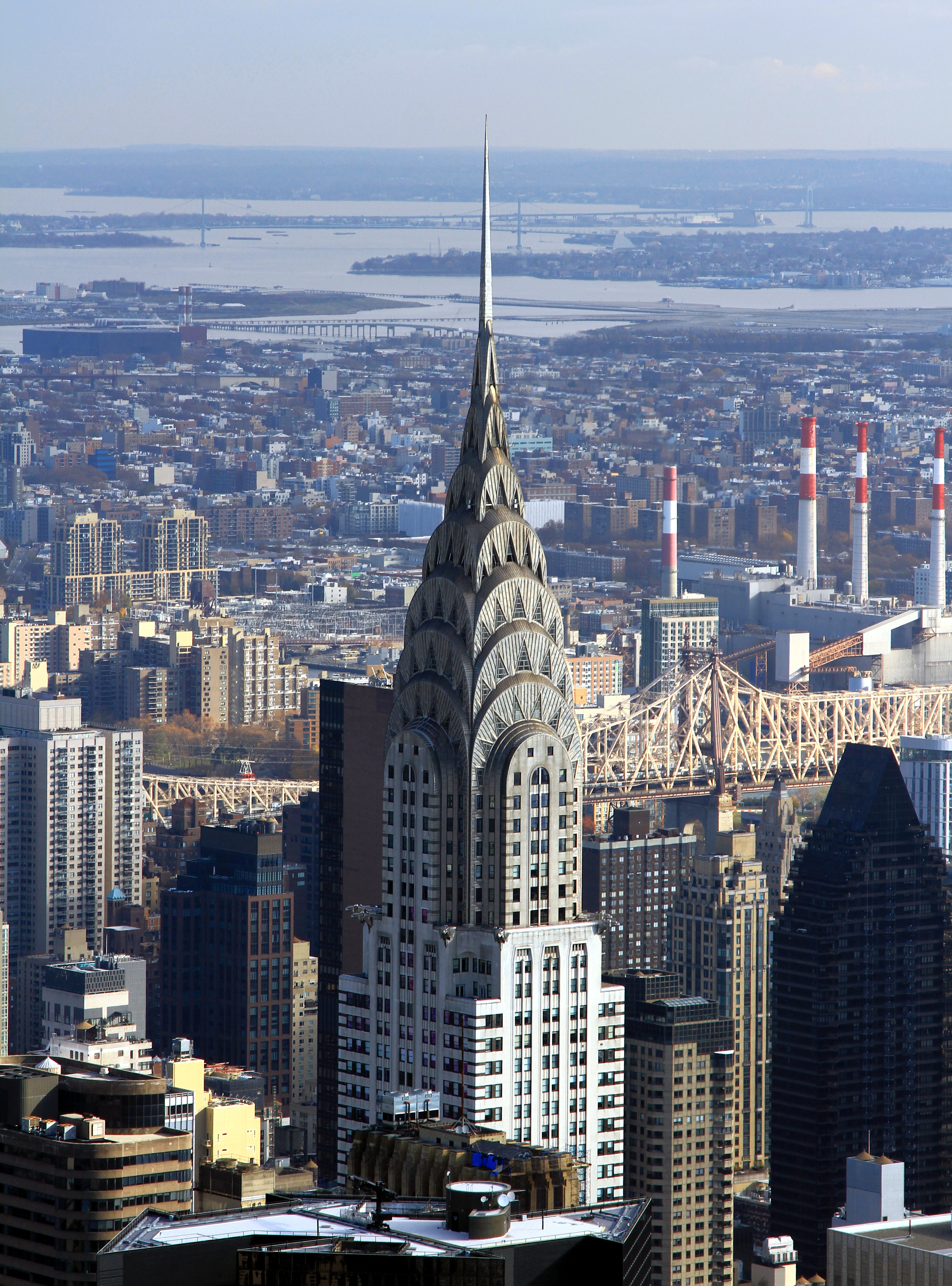
The Chrysler Building in New York City is an iconic Art Deco skyscraper completed in 1930. Designed by William Van Alen for Walter P. Chrysler, it was the world’s tallest building for a brief period.
Its stainless steel crown features distinctive sunburst patterns and automotive-inspired details like winged radiator cap replicas. The tapered structure minimizes street-level impact while ensuring visibility.
The building’s facade showcases geometric patterns, stylized florals, and machine motifs, embodying modernity and progress.
Its lobby contains murals and mosaics reflecting the Art Deco style, making the Chrysler Building a masterpiece of architectural history.
2. Empire State Building
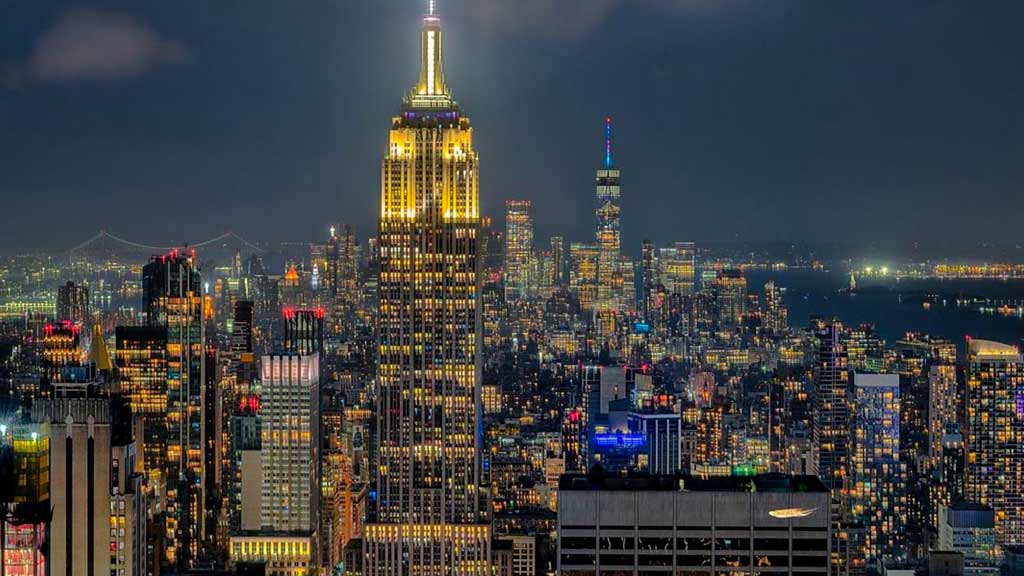
The Empire State Building stands as a towering icon of Art Deco architecture in New York City. Completed in 1931, it held the title of the world’s tallest building for several decades.
Located at 34th Street and 5th Avenue, its design emphasizes vertical lines and sleek metallic accents typical of Art Deco style.
The building’s limestone facade and steel frame showcase simplicity and elegance, symbolizing New York’s nickname, “The Empire State.”
Its enduring presence highlights the Roaring 20s’ spirit of progress and innovation, making it a lasting landmark in the city’s skyline.
3. Eastern Columbia Building

Standing 264 feet tall in downtown Los Angeles, the Eastern Columbia Building is a stunning example of Art Deco design completed in 1930.
Known as the “Jewel of Downtown,” its turquoise terracotta facade features gold leaf accents and geometric patterns typical of the era. The four-sided clock tower rises above the 150-foot height limit, exempted for its design.
Inside, the grand lobby showcases decorative staircases, elevator doors, and intricate cornices, all highlighting architect Claud Beelman’s innovative style. Converted into luxury apartments in 2004, it remains an iconic Los Angeles landmark.
4. Hoover Building

The Hoover Building in London exemplifies Art Deco elegance with its bold colors and streamlined design. Completed in 1933, it served as a flagship factory and showroom for vacuum cleaners.
The facade features blue, cream, and black hues, accentuated by geometric patterns and stylized motifs. Its vertical emphasis and symmetrical shapes embody the optimism and industrial progress of the era.
The building’s iconic entrance boasts curved glass blocks and decorative metalwork, making it a landmark of British Art Deco architecture. Today, it stands as a celebrated symbol of 20th-century design innovation.
5. Griffith Observatory

Located in Los Angeles, the Griffith Observatory is a standout example of Art Deco architecture combined with Greco-Roman influences.
Designed by John C. Austin and Frederic Morse Ashley, it opened in 1935 as a public astronomy education center.
The observatory features a domed rotunda with a stunning zodiac fresco illuminated naturally by day and secretly by night.
Its principal attraction, the Zeiss Telescope, sits in a sleek Art Deco tower marked by geometric forms and decorative concrete and travertine accents. This landmark symbolizes both scientific progress and architectural elegance.
6. Basilica of the Sacred Heart, Brussels

Standing as one of the largest Art Deco churches globally, the Basilica of the Sacred Heart in Brussels captivates with its monumental scale and geometric precision.
Completed in 1969, this landmark combines traditional religious architecture with bold Art Deco elements like clean lines, stylized façades, and expansive stained-glass windows.
Its reinforced concrete structure showcases functional modernism, while the dome and towers feature streamlined design, representing both spiritual grandeur and 20th-century innovation.
The basilica remains a symbol of Belgium’s architectural ambition and Art Deco’s enduring appeal in sacred spaces.
7. Hyatt Regency Nice Palais de la Méditerranée

The Hyatt Regency Nice Palais de la Méditerranée stands as a stunning example of Art Deco elegance on the French Riviera.
Its whitewashed façade features dignified pediments and intricate bas-reliefs inspired by Greek mythology, including Poseidon.
Soaring ceilings and marble columns define the lobby, adorned with ornate decorations that epitomize the style’s grandeur.
The ballroom, known for geometric patterns and dramatic lighting, hosts weddings and galas, highlighting the building’s timeless luxury. Designed by masters Sathe and Bhuta, it remains a celebrated Art Deco landmark in Nice, France.
8. Palacio de Bellas Artes

Located in Mexico City, the Palacio de Bellas Artes combines Art Nouveau and Neoclassical exterior styles with a stunning Art Deco interior.
Its lobby features vivid murals by Diego Rivera and Siqueiros along with stained glass windows, showcasing geometric patterns and stylized motifs typical of Art Deco.
Constructed from Carrara marble, a classic Deco material, this cultural center embodies the creativity and elegance of the style in Latin America.
9. Chicago Board of Trade Building

Standing 605 feet tall, the Chicago Board of Trade Building was Chicago’s tallest skyscraper from 1930 to 1965. Designed by Holabird & Root, its limestone facade features intricate carvings and Babylonian-inspired basrelief friezes.
The entrance displays bronze figures of a farmer and a Native American, reflecting the trading of agricultural goods.
Crowned by an aluminum statue of Ceres, Roman goddess of agriculture, the building perfectly embodies Art Deco’s geometric style and decorative motifs.
Its travertine floors, marble walls, and cast bronze interiors showcase luxurious craftsmanship.
10. Teatro Eden

Located in Lisbon, Teatro Eden stands as a prime example of Art Deco elegance in theater design. Built in the 1930s, it features sleek geometric lines and rich decorative motifs that echo the period’s style.
The theater’s facade combines smooth curves with sharp angles, adorned with stylized patterns in colors.
Inside, lavish materials like marble and chrome enhance its luxurious feel. Teatro Eden continues to host performances, preserving the optimism and creative spirit of Art Deco architecture worldwide.
Alicia Richards