Beam bridges stand as some of the most enduring and recognizable feats in civil engineering. Their simple design—a horizontal beam supported by piers—has connected communities across rivers and valleys for centuries.
From ancient stone constructions to modern steel and concrete marvels, beam bridges showcase a blend of practicality and innovation.
These structures not only demonstrate advanced materials and design techniques but also incorporate smart technologies and eco-friendly features.
Their impact on infrastructure development continues to shape transportation and urban landscapes worldwide.
1. Donghai Bridge
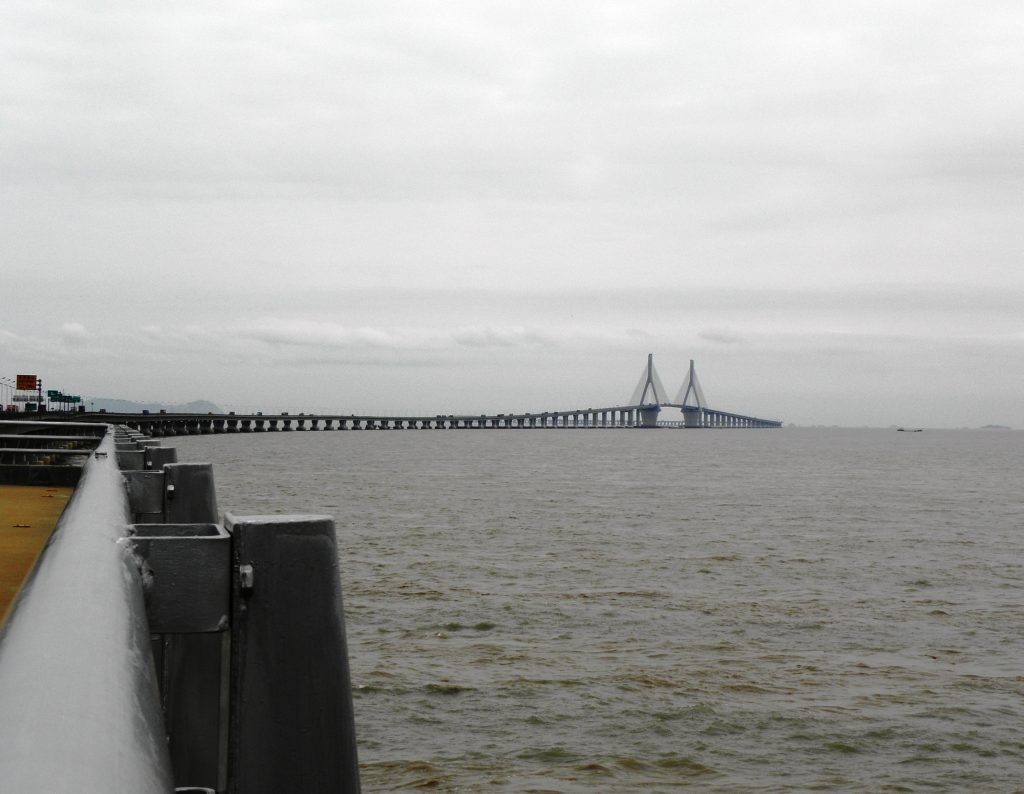
The Donghai Bridge ranks among the world’s longest beam bridges, stretching across the East China Sea.
Designed by the UK-based Halcrow Group, this 32.5-mile (52.5 km) cross-sea bridge connects Shanghai with the offshore Yangshan Deep-Water Port.
Its construction involves advanced engineering techniques to support massive loads while enduring harsh marine conditions.
The bridge plays a vital role in regional trade, showcasing expert architecture and design that combines strength, durability, and functionality in a sprawling marine environment.
2. Chesapeake Bay Bridge-Tunnel
Spanning 17.6 miles, the Chesapeake Bay Bridge-Tunnel connects Virginia’s Eastern Shore with the mainland near Norfolk.
Opened in 1964, it combines beam bridge segments and tunnels to cross the busy shipping channels safely.
The structure’s design addresses heavy traffic while withstanding harsh coastal weather. Its parallel spans facilitate efficient one-way traffic flow.
This engineering marvel is vital for regional transportation, blending complex beam bridge construction with innovative tunnel integration to ensure durability and functionality.
3. Tianjin Grand Bridge
The Tianjin Grand Bridge, stretching an impressive 70.6 miles, stands as one of the longest beam bridges globally. Designed by leading Chinese architects, it connects the Langfang and Qingxian regions in northern China.
The bridge supports the Beijing-Shanghai High-Speed Railway, boosting transport efficiency since its 2010 completion. Construction began in 2006 and finished in just four years, showcasing advanced engineering.
Its massive span and role in modern rail infrastructure make it a landmark of contemporary beam bridge design and urban connectivity.
4. Manchac Swamp Bridge
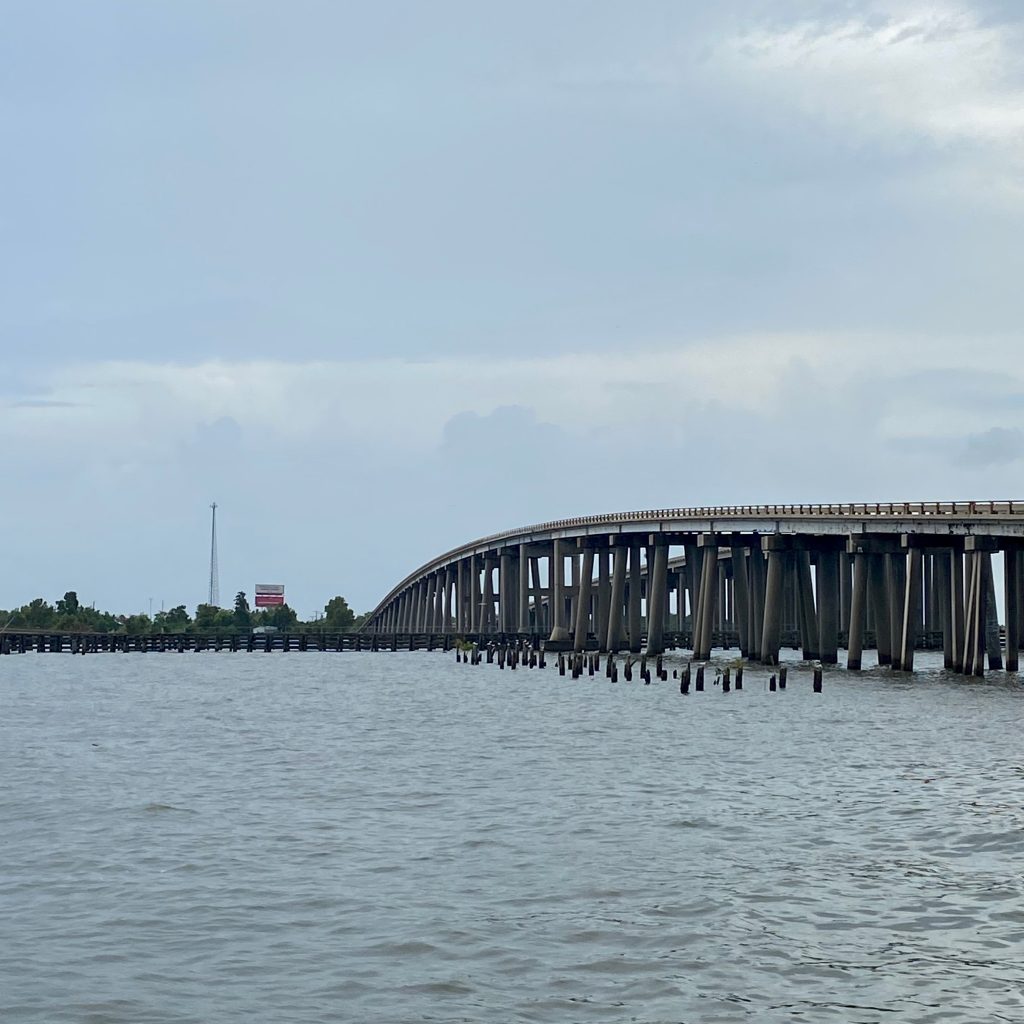
Stretching over 22 miles in Louisiana, the Manchac Swamp Bridge is one of the longest continuous beam bridges globally.
It supports Interstate 55 over the Manchac Swamp, showcasing concrete beam design adapted to marshy terrain.
Constructed in the late 1970s, it plays a crucial role in regional transportation by providing a safe, elevated crossing over sensitive wetlands.
Its durable concrete beams resist humidity and corrosion, ensuring longevity in this challenging environment.
The bridge exemplifies engineering that balances functionality with environmental sensitivity, connecting communities efficiently across the swamp.
5. Delaware Water Gap Toll Bridge
Completed in December 1953, the Delaware Water Gap Toll Bridge spans 2,465 feet across the Delaware River. It serves as a critical link on Interstate 80, drastically reducing travel time for commuters.
Commissioned by the Delaware River Joint Toll Bridge Commission, this beam bridge combines practical concrete and steel construction with sturdy piers.
Despite its relatively shorter length compared to others on this list, it remains a vital infrastructure piece reflecting mid-20th-century engineering expertise in toll bridge design and regional connectivity.
6. Albert Memorial Bridge
Albert Memorial Bridge in Regina, Canada, stands out for its blend of function and art. Completed in 1930, this concrete beam bridge spans Wascana Creek with multiple simple beams supported by reinforced concrete piers.
They used decorative elements like carved lions and medallions, enhancing its aesthetic appeal. The bridge’s design combines structural efficiency with ornamental details, reflecting early 20th-century architectural trends.
It continues to serve daily traffic while acting as a cultural landmark, demonstrating how beam bridges can marry engineering and artistry.
7. Portage Bridge

The Portage Bridge spans the Ottawa River, connecting Gatineau, Quebec, to Ottawa, Ontario. It features a classic beam bridge design using steel girders supported by multiple concrete piers.
Opened in 1973, the bridge handles heavy daily commuter traffic and supports light rail transit, showcasing adaptability to evolving transport needs.
Its strategic location facilitates regional connectivity between key urban centers in Canada’s National Capital Region.
Durable materials and smart maintenance have prolonged its lifespan, securing its role as a vital transportation artery.
8. Dhola Sadiya Bridge
The Dhola Sadiya Bridge, measuring nearly 9.15 miles, connects Assam and Arunachal Pradesh over the Lohit River. Approved in 2009 and completed in 2017, it significantly reduces travel time for millions annually.
Constructed by Navayuga Engineering Company, this beam bridge supports heavy traffic across fast-flowing waters.
Its design and construction overcame challenging river conditions, showcasing advanced engineering expertise utilized in key infrastructure projects that improve regional connectivity across Asia.
9. Labajin Bridge
Originating as a vital beam bridge, the Labajin Bridge showcases the enduring simplicity and strength of beam design. It spans a significant waterway, using reinforced concrete beams supported by sturdy piers.
Designed to manage heavy loads, it supports both vehicular and pedestrian traffic efficiently. Its construction highlights expert engineering skills adapted to local environmental conditions, ensuring resilience against weather and wear.
The Labajin Bridge continues to serve as a critical infrastructure element, connecting communities and facilitating commerce while illustrating beam bridges’ timeless practicality.
10. Lego-Brücke

Embodying creativity and engineering precision, the Lego-Brücke stands as a unique beam bridge constructed entirely from interlocking plastic bricks.
It demonstrates principles of beam bridge design on a small scale, using horizontal Lego beams supported by vertical pillars.
This model highlights modular construction techniques and showcases how simple materials can illustrate complex engineering concepts.
Often used in educational settings, the Lego-Brücke fosters understanding of load distribution, tension, and compression.
Its innovative approach inspires both young learners and engineers by blending playful design with fundamental civil engineering principles.
Alicia Richards