Greece is a treasure trove of architectural marvels that span centuries, reflecting its rich history and cultural heritage.
From ancient temples perched atop rocky hills to iconic monasteries clinging to cliffs, the country offers a stunning array of famous buildings that captivate visitors and historians alike.
Among Greece’s most celebrated structures are those that played pivotal roles in shaping Western civilization.
These landmarks not only showcase impressive design and craftsmanship but also tell stories of mythology, democracy, and ancient rituals.
These buildings provides a fascinating glimpse into Greece’s past and its enduring influence on art and architecture worldwide.
1. Parthenon
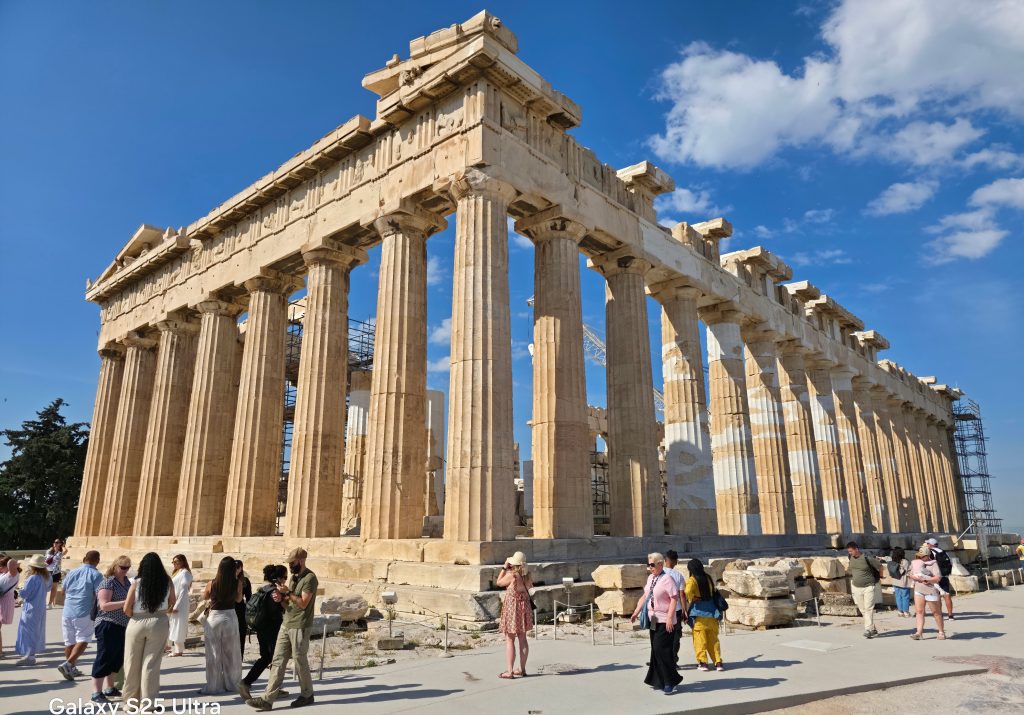
The Parthenon stands as Greece’s most iconic ancient building, dominating the Acropolis of Athens. Built between 447 and 438 BC, it showcases masterful Doric architecture with its rectangular layout and symmetrical columns.
Dedicated to Athena Parthenos, Athens’ patron goddess, the temple features exquisite sculptures overseen by Pheidias.
Despite centuries of wear, its elegant columns and detailed friezes continue to captivate visitors, symbolizing Greece’s artistic brilliance and rich cultural heritage.
The Parthenon’s influence extends worldwide, inspiring countless architects and symbolizing the peak of Classical Greek civilization.
2. Temple of Olympian Zeus
The Temple of Olympian Zeus in Athens stands as a colossal symbol of ancient Greek ambition and Roman influence.
Commissioned in the 6th century BC by Peisistratos but completed only in the 2nd century AD under Emperor Hadrian, this monumental temple originally featured 104 towering Corinthian columns, of which 15 still remain.
Dedicated to Zeus, the king of gods, its vast scale reflects both religious reverence and the shifting political powers that shaped its construction, showcasing the blend of Greek artistry and Roman engineering.
3. Ancient Theatre of Epidaurus
Constructed in the 4th century BC by architect Polykleitos the Younger, the Ancient Theatre of Epidaurus stands out for its exceptional acoustics and impressive design. Seating up to 14,000 spectators, it was used for reruns of famous Greek dramas.
This open-air theater is part of the Sanctuary of Asklepius, dedicated to the healing god, combining cultural entertainment with spiritual significance.
Recognized as a UNESCO World Heritage Site, it still hosts summer performances, attracting visitors worldwide to experience the magic of ancient Greek theater firsthand.
4. Stoa of Attalos
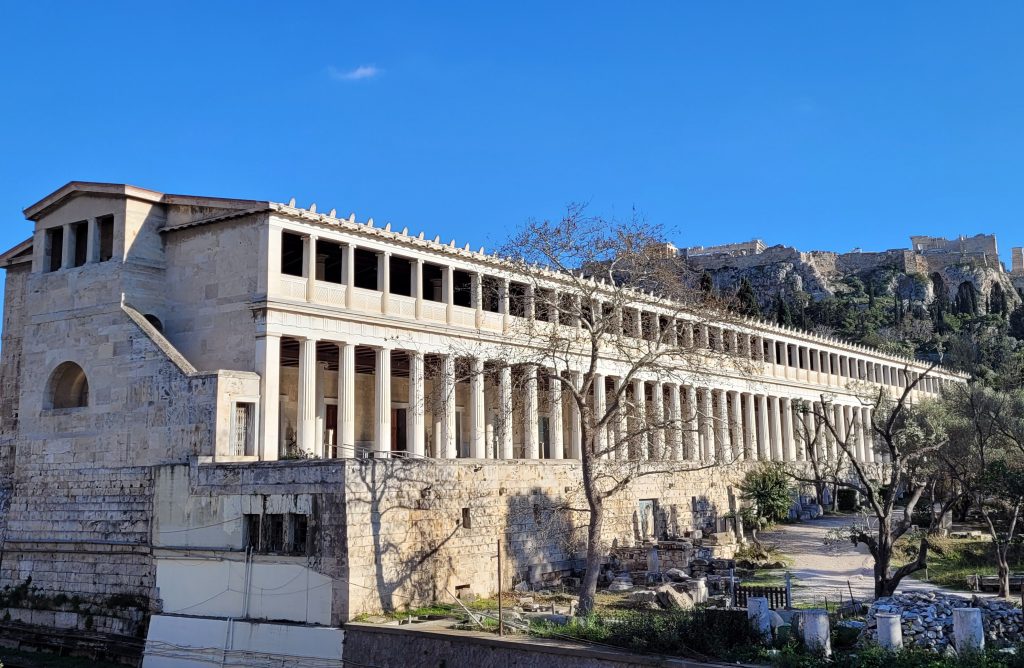
The Stoa of Attalos stands as a prime example of ancient Greek commercial architecture. Originally built in the 2nd century BC by King Attalos II of Pergamon, it served as a covered walkway and marketplace in the Ancient Agora of Athens.
Its impressive two-story structure features Doric columns on the ground floor and Ionic columns above, showcasing classical design principles.
Reconstructed in the 1950s, the stoa now houses the Museum of the Ancient Agora, displaying artifacts that highlight Athens’ social and political history. This building embodies both functional urban design and cultural significance.
5. Temple of Hephaestus
The Temple of Hephaestus stands as one of the best-preserved ancient Greek temples, located in Athens’ Agora.
Built around 450 BC, this Doric peripteral temple honors Hephaestus, god of metalworking, and Athena, goddess of crafts.
Its pristine condition offers a clear view of classical architectural elements like fluted columns and detailed friezes depicting mythological scenes.
The temple’s elevated position provides stunning city views, reflecting its dual role as a religious site and a symbol of ancient craftsmanship and civic pride.
6. Palace of the Grand Master of the Knights of Rhodes
Standing tall with its circular towers, the Palace of the Grand Master of the Knights of Rhodes dominates Rhodes’ medieval Old Town.
Built in the 14th century by the Knights of Saint John, this fortress showcases striking Hellenistic mosaic floors featuring goddesses from ancient Greek mythology.
Visitors pay an entry fee of 8 euros to explore exhibits on Ancient and Medieval Rhodes, displaying pottery, jewelry, and local artifacts.
The palace’s black-and-white geometric courtyard offers a perfect photo opportunity. Open daily from 9:00 AM to 7:00 PM, it remains one of Greece’s most unmissable historic landmarks.
7. Erechtheion
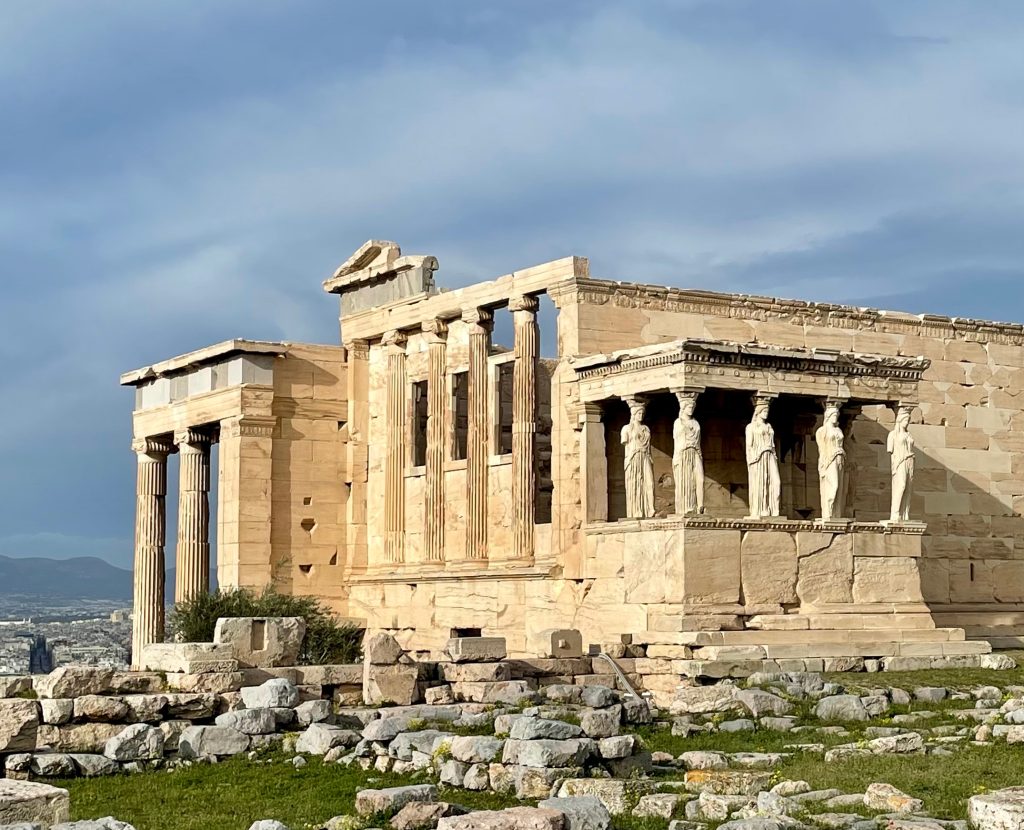
Admire the Erechtheion, an ancient temple on the Acropolis known for its unique asymmetrical design and religious significance.
Built between 421 and 406 BC, it honors both Athena and Poseidon, reflecting Athens’ mythological heritage.
The temple features the iconic Porch of the Caryatids, where six elegant female statues serve as supporting columns. Its complex structure adapts to the rocky terrain, showcasing innovative ancient architecture.
The Erechtheion’s artistic details and sacred history make it a must-see landmark that highlights Athens’ spiritual and architectural achievements.
8. Panathenaic Stadium
The Panathenaic Stadium, built entirely of white marble, stands as a unique architectural marvel in Athens. Originally constructed in 330 BC and rebuilt in 144 AD, it hosted the first modern Olympic Games in 1896.
Visitors can climb the horseshoe-shaped arena’s rows of marble seats to enjoy panoramic views. The stadium’s onsite museum displays Olympic memorabilia, offering insight into Greece’s rich athletic history and its lasting Olympic spirit. This iconic stadium symbolizes Greece’s enduring commitment to sport and cultural heritage.
9. Temple of Hera, Olympia
Situated in Olympia’s sacred Altis, the Temple of Hera stands as one of Greece’s oldest Doric temples. Built in the 7th century BC, it hosted religious ceremonies honoring Hera, queen of the gods.
The temple’s modest yet enduring ruins reveal thick columns and a rectangular layout typical of early Greek architecture. Notably, the Olympic Torch is still lit here before every modern Olympic Games, symbolizing continuity from ancient traditions.
Visitors can explore its foundations alongside the nearby Temple of Zeus, gaining insight into the spiritual heart of the original Olympic Games.
10. Acropolis Museum
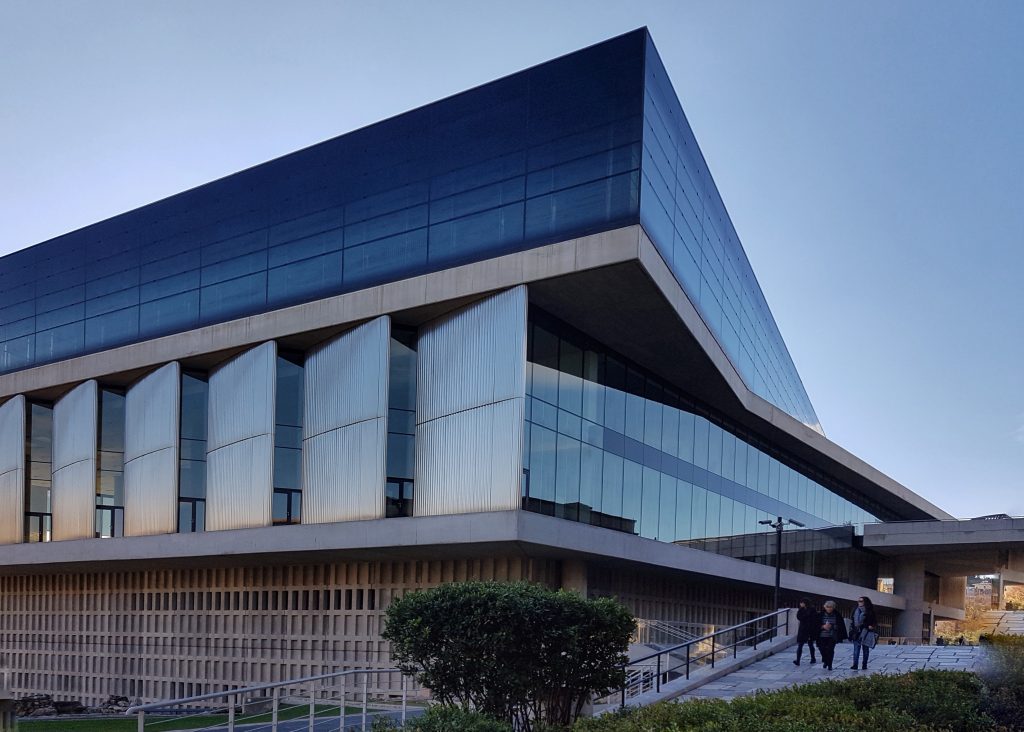
The Acropolis Museum in Athens houses artifacts found on the Acropolis site, bridging ancient history with modern preservation.
Opened in 2009, it showcases over 4,000 objects from the Greek Bronze Age to Roman and Byzantine periods.
Visitors experience an architectural masterpiece featuring a glass floor revealing excavations beneath. The museum’s top floor offers stunning views of the Parthenon, enhancing the cultural connection.
Highly accessible, it provides interactive exhibits and detailed explanations, making it a key destination for understanding Greece’s ancient heritage.
Alicia Richards