Cathedrals stand as monumental symbols of faith artistry and history across the globe. These architectural marvels often dominate city skylines reflecting centuries of religious devotion and cultural heritage. From soaring spires to intricate stonework each cathedral tells a story that goes beyond its walls.
Many of the world’s most famous cathedrals have survived wars fires and the passage of time to remain vibrant centers of worship and tourism.
They showcase not only stunning design but also house magnificent pipe organs and priceless artworks that captivate millions. Exploring these iconic structures offers a glimpse into the social and spiritual fabric of their regions.
This article highlights ten of the most renowned cathedrals worldwide celebrated for their architectural brilliance and historical significance.
Whether admired for their grandeur or their role in community life these cathedrals continue to inspire awe and wonder.
1. Notre Dame de Paris
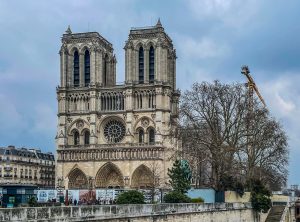
Notre Dame de Paris stands as a Gothic masterpiece, completed in the 14th century. It features flying buttresses, detailed sculptures, and its iconic rose windows that attract millions annually. This cathedral witnessed historic events like Napoleon’s coronation and Joan of Arc’s beatification.
Despite the 2019 fire, extensive restoration efforts are reviving its grandeur. Built on ancient religious sites, its twin towers dominated Paris until the Eiffel Tower’s rise.
Visitors explore intricate biblical statues and stunning interior reliefs that showcase medieval European artistry at its finest.
2. Cologne Cathedral
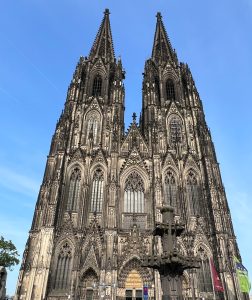
Cologne Cathedral, or Kölner Dom, stands as Germany’s most visited landmark, drawing around 20,000 daily visitors.
Its twin towers soar 515 feet (157 meters), making it a gothic marvel and a UNESCO World Heritage Site since 1996. Construction started in 1248 but halted for centuries before completion in 1880, preserving its medieval design.
The cathedral has witnessed historic events, survived World War II bombings, and even served as a stable during the French Revolution.
Inside, it houses one of the largest medieval choir stalls, adding to its architectural and religious significance.
3. Florence Cathedral
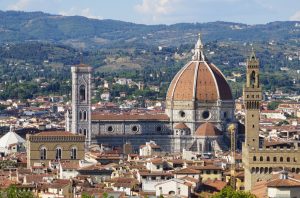
Standing as a pinnacle of Italian Renaissance architecture, Florence Cathedral, or Santa Maria del Fiore, dazzled the world upon its completion in 1436.
It features the largest brick dome ever built, designed by Filippo Brunelleschi, which dominates Florence’s skyline.
The exterior showcases harmonious white, green, and pink marble panels, while the 19th-century Gothic Revival facade boasts intricate carvings, bronze doors, and rose windows.
Inside, visitors can admire colorful stained glass, sculptures of angels, and notable artworks like the Diocesan altar. Open daily from 10:00 AM to 5:00 PM, it remains a cultural treasure and architectural marvel.
4. Milan Cathedral
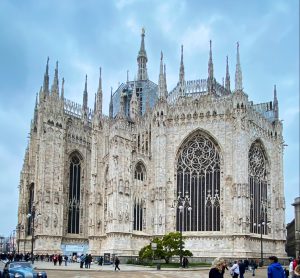
Milan Cathedral, or Duomo di Milano, stands as one of the world’s largest Gothic cathedrals, known for its intricate marble façade and 135 spires pierced by 3,400 statues. Construction spanned nearly six centuries, embodying Italy’s rich artistic and religious history.
Visitors marvel at its 55 stained-glass windows and the golden Madonna statue atop the tallest spire. The rooftop offers breathtaking panoramic views of Milan, accessible by lift.
This cathedral remains a symbol of resilience and craftsmanship, attracting millions to experience its grand exterior and stunning interior.
5. Chartres Cathedral
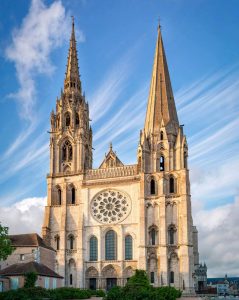
Chartres Cathedral stands as a pinnacle of French Gothic architecture, completed in 1252. It boasts remarkably preserved 12th- and 13th-century stained-glass windows, showcasing vivid biblical scenes in brilliant colors.
Its two contrasting spires—Romanesque and Gothic—add unique character. The cathedral’s vast nave and intricate sculptures remain in excellent condition, drawing pilgrims and visitors alike.
Its labyrinth, carved into the nave floor, symbolizes the spiritual journey. International organ competitions, held here biennially, celebrate its rich musical heritage.
Located southwest of Paris, Chartres Cathedral offers an unparalleled glimpse into medieval artistry and faith.
6. St. Stephen’s Cathedral, Vienna
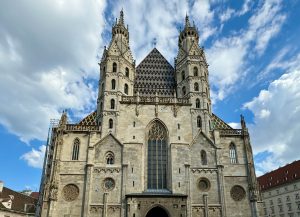
Standing in the heart of Vienna at Stephansplatz, St. Stephen’s Cathedral is an iconic Gothic-Romanesque masterpiece built in 1137.
It features a 136-meter tall tower, gleaming limestone walls, and a vibrant roof of over 230,000 glazed tiles forming the Royal and Imperial double-headed eagle and Vienna’s coat of arms.
Inside, visitors explore atmospheric catacombs housing Hapsburg dynasty remains. The cathedral’s 13 bells include the mighty Pummerin, Europe’s second-largest free-swinging chimed church bell.
St. Stephen’s blends history, art, and culture, hosting classical concerts and offering panoramic city views from its tower.
7. Catedral de Sevilla
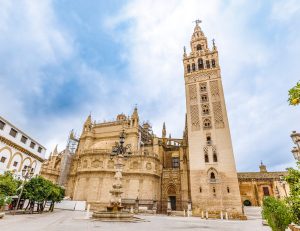
Spanning from 1401 to 1528, Catedral de Sevilla stands as the largest Gothic cathedral and third largest church worldwide.
Built atop a former mosque, its vast nave and intricate golden altarpiece, the largest globally, showcase unmatched artistry.
Visitors find the tomb of Christopher Columbus inside, adding historical depth. Instead of stairs, the Giralda bell tower, once a minaret, features ramps, blending Islamic and Christian architecture.
Climbing it rewards visitors with panoramic views of Seville’s historic center, enhancing its status as a must-visit Andalusian landmark.
8. St. Paul’s Cathedral

St. Paul’s Cathedral in London stands as an iconic symbol of the city’s resilience and architectural grandeur.
Designed by Sir Christopher Wren in the late 17th century, its English Baroque style features a 365-foot dome inspired by St. Peter’s Basilica in the Vatican.
The cathedral’s triple dome construction includes an outer dome, a steeper inner dome, and a hidden central dome capped with a cross and Corinthian columns.
Visitors admire its marble floors, Baroque facade, and tombs of notable British figures, making it a top destination for history and art enthusiasts.
9. St. Patrick’s Cathedral
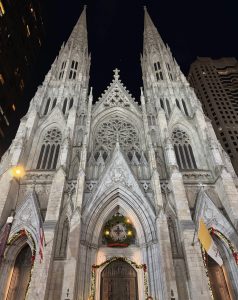
St. Patrick’s Cathedral in New York City is the largest Neo-Gothic Catholic cathedral in North America, completed in 1878.
Located on Fifth Avenue, it occupies an entire city block and offers a serene spiritual oasis amid Manhattan’s chaos.
Its soaring spires, intricate stonework, and stunning stained glass reflect the faith and resilience of Irish immigrants.
The cathedral remains a key religious site and cultural landmark, hosting annual St. Patrick’s Day celebrations and drawing millions for worship and tourism each year.
10. Saint Mark’s Basilica
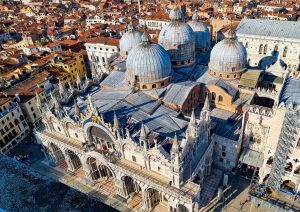
Saint Mark’s Basilica in Venice is a masterpiece of Byzantine architecture, famed for its intricate gold-leaf mosaics and marble-clad walls.
Rebuilt after a fire in 932, it features protruding domes that define Venice’s skyline. Located in Piazza San Marco, it serves as the seat of the Roman Catholic Archdiocese of Venice.
Its lavish decoration and historical significance as a former trading center highlight its cultural and religious importance, attracting millions of visitors annually.
Alicia Richards